영어 원문 보기
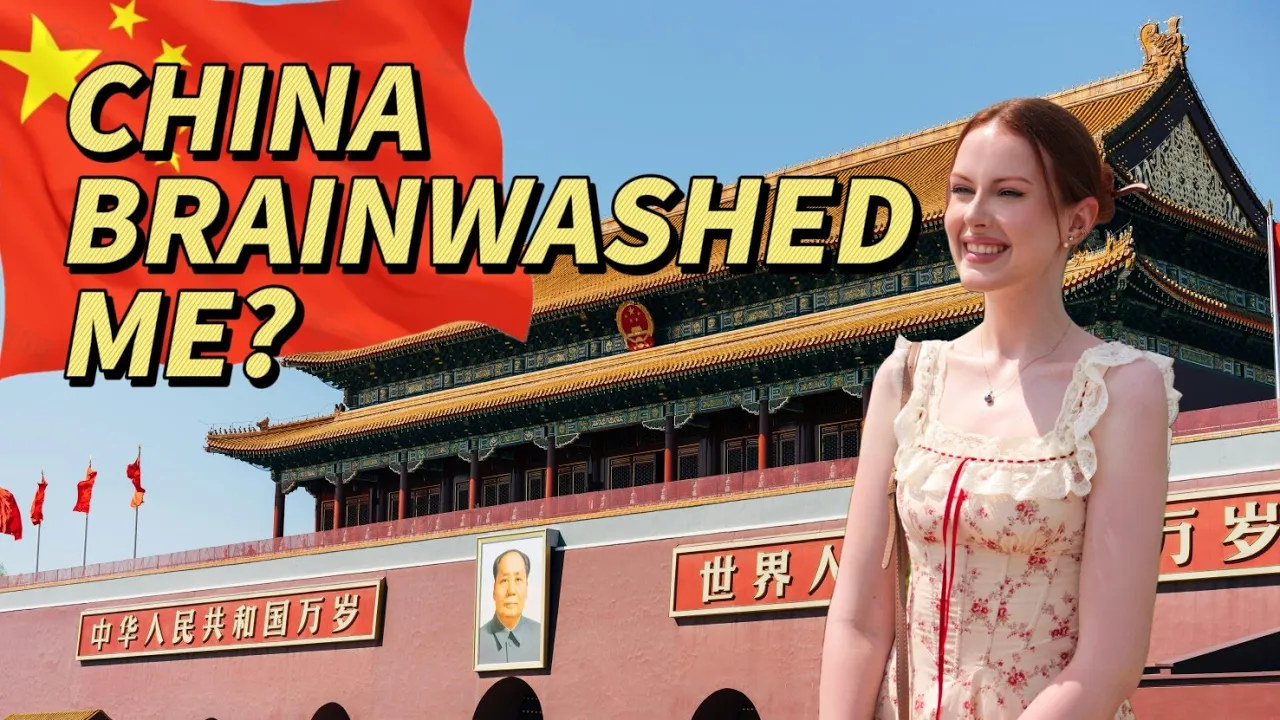
Has China Made Me a Communist? | Visiting Beijing
Returning to Beijing: Family, History and Politics
Discussing my political journey, figuring out where I align on the political spectrum and how that fits into both my identity as a Dane, as well as a foreigner in a post Mao's China.
Disclaimer, I held these beliefs long before my move here and before meeting Jiayi.
_________Follow us...
Discussing my political journey, figuring out where I align on the political spectrum and how that fits into both my identity as a Dane, as well as a foreigner in a post Mao's China.
Disclaimer, I held these beliefs long before my move here and before meeting Jiayi.
_________Follow us on________
IG: julie_odsgaard
Julie's Red Note: 5357620550
Julie from Jiayi & Julie in China reflects on returning to Beijing with a deeper understanding of its history. She remembers seeing the city as a child and says the buildings feel different to her now. The video shows a queue of at least 20 people waiting for photos at an unnamed spot, then turns to her political views and reflections on socialism, communism, Mao and China's history. She says she visited China with her parents in 2007 and mentions that her nephew is now experiencing the sights as she once did.
Discussing my political journey, figuring out where I align on the political spectrum and how that fits into both my identity as a Dane, as well as a foreigner in a post Mao's China.
Disclaimer, I held these beliefs long before my move here and before meeting Jiayi.
_________Follow us on________
IG: julie_odsgaard
Julie's Red Note: 5357620550
Julie says it feels funny to see Beijing again after more than a decade and a half, this time with a better understanding of the city's history. She reflects on Beijing's past, its buildings and how her view has changed since childhood. Her nephew now gets to experience the sights as she did. At one stop, she says at least 20 people were waiting to take photographs, and her group took pictures with a military-themed display. The location of that stop is not named. The video then becomes a personal political essay: Julie describes herself as left-leaning and socialist, discusses her views of Danish politics and rural public transport in her home-country example, and explains questions she had about labor rights and basic necessities. She says she visited China in 2007 with her parents and had seen Mao's mausoleum then. She describes how conversations with Jay led her to read more about Mao and China and says her views became more nuanced. She also shares her opinion that she understands why some people miss Mao. The transcript does not identify the queued photo spot or other current Beijing attractions.
Julie from Jiayi & Julie in China reflects on returning to Beijing with a deeper understanding of its history. She remembers seeing the city as a child and says the buildings feel different to her now. The video shows a queue of at least 20 people waiting for photos at an unnamed spot, then turns to her political views and reflections on socialism, communism, Mao and China's history. She says she visited China with her parents in 2007 and mentions that her nephew is now experiencing the sights as she once did.
A return to Beijing prompts reflections on history, family memories and the creator's political views.
Returning to Beijing: Family, History and Politics
0:29 Julie says Beijing felt more magical to her with a better understanding of its history. Reading about the city before or during a return visit may help you notice details she says she missed as a child.
0:45 She says her nephew now gets to experience the sights as she did as a child. If traveling with younger family members, leave room for them to explore and notice the city in their own way.
1:02 Julie says at least 20 people were waiting to take photos at one stop. Leave some flexibility around photo spots; she does not identify the site or give a usual wait time.
0:02 Seeing Beijing again as an adult
0:29 Childhood memories of the city
0:45 A nephew experiences the sights
0:53 Waiting in a photo queue
1:21 Explaining her political identity
2:42 Remembering a visit to Mao's mausoleum
3:18 Questions about Mao and China
3:54 A brief exchange about China's founding
4:12 The discussion ends
chinachinesechinese historypoliticscommunismsocialismchina todayliving abroadliving in chinaamwfmixed couplemulticultural couplemulticulturaldanishdenmarkWhat does the creator say changed about seeing Beijing again?
She says she returned with a better understanding of its history and sees the city's buildings differently than she did as a child.
When did she previously visit China?
She says she visited with her parents in 2007. The video does not give the filming date of this return visit.
How long was the photo queue?
Julie says at least 20 people were waiting to take pictures at an unnamed stop; she does not give a typical wait time.
Does the video name the place where the group queued for photos?
No. The creator describes a military-themed photo opportunity, but the location is not identified in the transcript.
What political views does the creator share?
She describes herself as left-leaning and socialist, and says her views of Mao and China became more nuanced after conversations and further reading. These are her personal reflections.