Originalquelle
The First Emperor's Mega Tomb: Uncovering a Lost World | SPECIAL | National Geographic
China's First Emperor's Tomb: Exploring the Terracotta Army
National Geographic Explorer Albert Lin takes us on a journey to uncover the legends behind the First Emperor of China, through unprecedented access to a massive tomb the size of Manhattan. What secrets do the world-famous Terracotta Warriors reveal about western influence into their design? And what...
National Geographic Explorer Albert Lin takes us on a journey to uncover the legends behind the First Emperor of China, through unprecedented access to a massive tomb the size of Manhattan. What secrets do the world-famous Terracotta Warriors reveal about western influence into their design? And what else can the tomb uncover about the warrior king who united seven warring kingdoms into one empire?
Join National Geographic Explorer Albert Lin as he delves into the mysteries surrounding the First Emperor of China's colossal tomb, a site as expansive as Manhattan. This captivating journey unveils the secrets held within, exploring the world-renowned Terracotta Warriors and their potential links to Western design influences. Prepare to be amazed by the revelations about the emperor who unified seven warring kingdoms, a story etched in history and revealed through this epic exploration.
National Geographic Explorer Albert Lin takes us on a journey to uncover the legends behind the First Emperor of China, through unprecedented access to a massive tomb the size of Manhattan. What secrets do the world-famous Terracotta Warriors reveal about western influence into their design? And what else can the tomb uncover about the warrior king who united seven warring kingdoms into one empire?
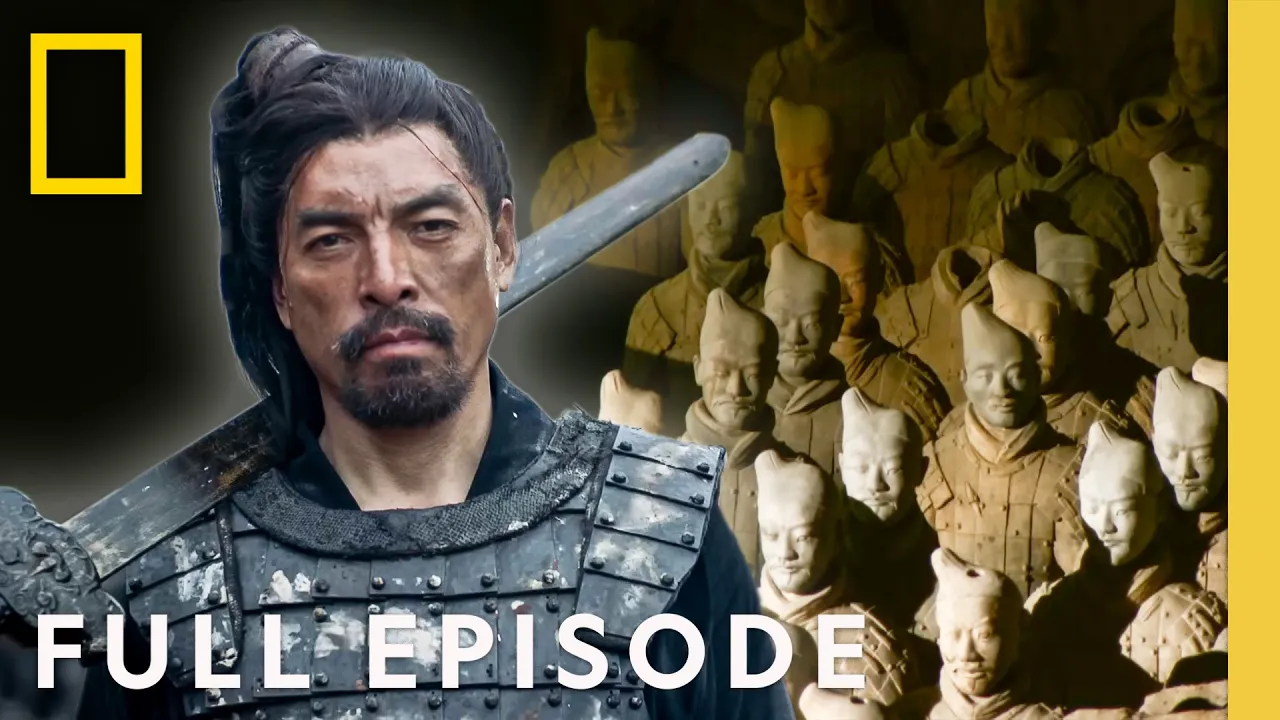
National Geographic Explorer Albert Lin investigates the burial complex of China's First Emperor. The documentary describes the site as 22 square miles, with about 600 pits, the Terracotta Army, living quarters and other burials around the central mound. Lin visits the army, described as 8,000 clay warriors and 520 life-sized horses, and sees stone armor and surviving weapons. The programme compares archaeological finds with the Shi Ji, an official history written 100 years after the Emperor's death. Historian Lukas Nickel proposes that Greek sculptors may have influenced the life-sized figures, while the film notes that most scholars think they developed independently. A skull's brow and nose are examined for possible evidence of outsiders, but Lin says this is not conclusive. Later, the documentary follows scrolls and remains that may shed light on the Emperor's family and the deaths of his eldest son and concubines. Archaeologists use core sampling, ground-penetrating radar and remote sensing to assess the still-unopened tomb. The film reports high mercury concentrations around the mound and compares them with the historical account of rivers of liquid mercury; it does not show the burial chamber being opened.
National Geographic Explorer Albert Lin investigates the burial complex of China's First Emperor. He surveys the site, visits the Terracotta Army and examines stone armor and weapons, then follows archaeological evidence and historical texts about possible foreign influence, the Emperor's family and the tomb's contents. The documentary presents a Greek connection as a theory, treats a skull analysis as inconclusive, and uses remote sensing to describe the still-unopened burial chamber.
Albert Lin explores the First Emperor's tomb complex, the Terracotta Army and evidence behind its legends.
China's First Emperor's Tomb: Terracotta Army and Archaeology
2:43 The documentary describes a 22-square-mile complex, larger than Egypt's Valley of the Kings, with the central tomb among many pits. Use that scale to understand why the Terracotta Army is only one part of the wider site.
5:59 The Terracotta Army section is described as 8,000 warriors and 520 life-sized horses, arranged with infantry and cavalry. Those figures help put the burial army in context; they are the documentary's reported counts.
8:07 Albert says the Shi Ji was written 100 years after the Emperor's death and shaped what people knew about him. The film compares that later written account with archaeological findings, so keep legend and excavated evidence distinct.
14:43 Historian Lukas Nickel proposes Greek influence on the life-sized figures, while the film says most scholars believe they developed independently. Treat the foreign-source idea as a theory discussed in the documentary, not a settled conclusion.
21:55 Albert says the skull analysis is not conclusive proof, only plausible evidence that outsiders may have been at the tomb site. The documentary therefore does not establish that the person was a foreigner.
41:05 The archaeologists describe using core sampling, ground-penetrating radar and remote sensing to study the tomb, and say their data suggest it may remain intact. The burial chamber is not shown being opened in this documentary.
0:11 The First Emperor unites kingdoms
2:39 The vast tomb complex
5:29 Exploring the Terracotta Army
8:07 The Shi Ji and the Emperor's legend
9:12 Stone armor and new discoveries
10:13 Weapons buried with the army
11:49 The Emperor's world beneath the site
14:12 A theory of Greek influence
17:00 Statues and east-west contact
19:23 Investigating a mysterious skull
23:39 The legend of mercury and immortality
26:05 Scrolls about the Emperor's final days
32:14 Evidence about the eldest heir
34:35 The concubines' remains
40:16 What may lie inside the tomb
national geographicnat geonatgeoanimalswildlifescienceexplorediscoversurvivalnatureculturedocumentaryperpetual planet nat geophotographyfull episodealbert linincredible journeylegendsbehind the chinaemperor of chinamassive tombchinamega tombsecrets of the terracotta armychina's mega tombthe terracotta armyspecialterracotta armyexploring 4kHow large is the First Emperor's tomb complex?
The documentary says the complex covers 22 square miles and includes about 600 pits. It compares the area with Manhattan and says it is bigger than Egypt's Valley of the Kings.
How many figures are in the Terracotta Army?
Albert describes 8,000 warriors and 520 life-sized horses buried with the First Emperor.
Does the documentary prove that Greek sculptors made the Terracotta Warriors?
No. Historian Lukas Nickel proposes Greek influence, but the documentary says most scholars believe the figures developed independently and presents the foreign-source idea as a theory.
What does the skull analysis show about possible outsiders?
The expert says the skull is East Asian overall but has a stronger brow ridge and more projecting nose than typical. Albert calls it plausible evidence, not conclusive proof, of outsiders at the site.
What written source does the film discuss?
It discusses the Shi Ji, an official history said to have been written 100 years after the Emperor's death. The documentary compares its account with archaeological evidence.
What did archaeologists find in the tomb site besides the Terracotta Army?
The film shows stone armor, surviving swords, scrolls, skulls and the remains of young women in other tombs. It reports that 10 of 98 more tombs had been excavated, each containing mutilated remains of a young woman.
Has the First Emperor's burial chamber been opened?
The documentary says archaeologists believe the tomb may still be intact based on their surveys. It describes remote sensing and mercury readings but does not show the burial chamber being opened.