Source originale
Blown Away by Breathtaking Kung Fu in the Heart of Buddhist China
Luoyang & Dengfeng: Buddhist Grottos and Shaolin Kung Fu
Blown away doesn't even cover it.
Welcome to Episode 3 of my Journey Around China (2026). In this video, I start my journey west, trading Beijing's landmarks for ancient capitals, Buddhist grottos, and the birthplace of Kung Fu itself. This vlog takes you through Luoyang and Dengfeng: two places...
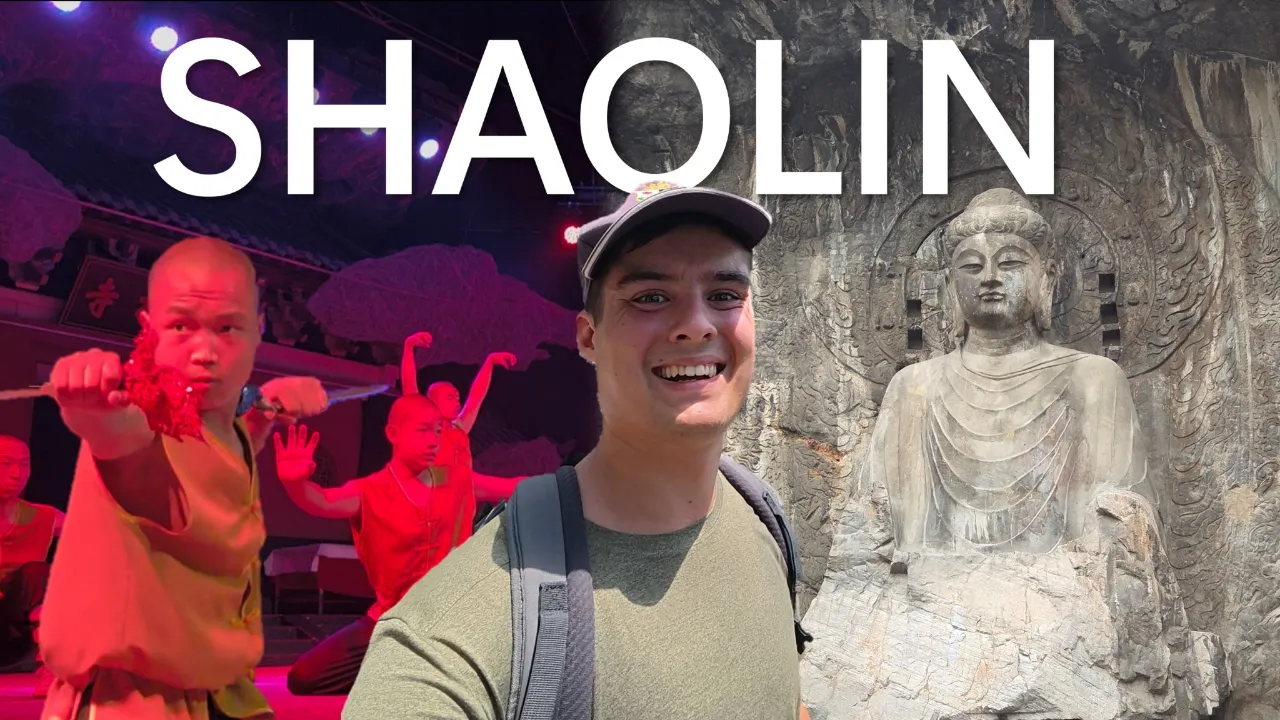
Blown away doesn't even cover it. Welcome to Episode 3 of my Journey Around China (2026). In this video, I start my journey west, trading Beijing's landmarks for ancient capitals, Buddhist grottos, and the birthplace of Kung Fu itself. This vlog takes you through Luoyang and Dengfeng: two places with deep connections to the foundations of Buddhism in China and two places that will completely astonish you. I started at the Longmen Grottoes—thousands of Buddha statues carved into limestone cliffs over 1,500 years ago. The scale is mind-blowing. Then we hit the Horse and Chariots Museum (a literal underground pit of ancient warhorses) before sunset at Lijingmen—Luoyang's stunning old town gate. After a visit to Baima Temple, the oldest Buddhist temple in China, I made the journey to Shaolin Temple: the birthplace of Zen Buddhism and Shaolin Kung Fu. Watching a live Kung Fu demonstration had my jaw on the floor and taking the cable car up into the Songshan mountains stunned me with the remarkable views.
Tom Hemsworth leaves Beijing behind for a journey into China's Buddhist heartland. From the colossal Longmen Grottoes to the ancient warhorses buried underground, every stop leaves him awestruck. But the real knockout? A live Kung Fu show at Shaolin Temple that literally drops his jaw. Plus a cable car ride over Songshan mountains for views that seal the deal.
Blown away doesn't even cover it. Welcome to Episode 3 of my Journey Around China (2026). In this video, I start my journey west, trading Beijing's landmarks for ancient capitals, Buddhist grottos, and the birthplace of Kung Fu itself. This vlog takes you through Luoyang and Dengfeng: two places with deep connections to the foundations of Buddhism in China and two places that will completely astonish you. I started at the Longmen Grottoes—thousands of Buddha statues carved into limestone cliffs over 1,500 years ago. The scale is mind-blowing. Then we hit the Horse and Chariots Museum (a literal underground pit of ancient warhorses) before sunset at Lijingmen—Luoyang's stunning old town gate. After a visit to Baima Temple, the oldest Buddhist temple in China, I made the journey to Shaolin Temple: the birthplace of Zen Buddhism and Shaolin Kung Fu. Watching a live Kung Fu demonstration had my jaw on the floor and taking the cable car up into the Songshan mountains stunned me with the remarkable views.
Tom introduces Luoyang as one of China's four ancient capitals, important for 13 dynasties and for the spread of Buddhism. At the Longmen Grottoes he describes thousands of carvings along the river, most built in the Northern Wei dynasty about 1,500 years ago. He mentions statues from 2 cm up to 17 m, over 2,000 caves and the Binyang Cave, then crosses to the east side for a view back at the west side and visits a temple overlooking the grottoes. He visits a museum of horse and chariot pits and then Luoyang's old town, where he finds little authentic and says there is nothing much there, preferring the food streets. He walks to the Lijingmen west gate, eats fried beef dumplings and beef soup at a street restaurant and sees another gate that is free to enter. At Baima Temple he explains it is the oldest Buddhist temple in China, from around 68 AD, with halls built by India, Myanmar and Thailand. At Shaolin Temple he describes the Indian monk who meditated in a nearby cave and the movements that developed into kung fu, then walks through the pagoda forest where around 230 or 240 monks are interred. He takes a cable car to a mountain village with views, hikes for a while and heads back for a live kung fu show in the martial arts hall, which he calls one of the coolest things he has seen. He tells viewers to come to the Shaolin area from Luoyang or Xi'an.
Tom Hemsworth begins the western leg of his 2026 journey around China in Luoyang and nearby Dengfeng. He walks the Longmen Grottoes, crosses the river to the east side for the view back, and visits the Horse and Chariot Museum and the old town gate Lijingmen. He then goes to Baima Temple, which he calls the oldest Buddhist temple in China, and to Shaolin Temple, where he sees the pagoda forest, rides a cable car into the mountains and watches a live kung fu show. He gives an honest verdict on the old town, which he finds disappointing.
A walk through Luoyang's Longmen Grottoes, Baima Temple and the old town, then Shaolin Temple's pagoda forest, a cable car ride and a live kung fu show.
Luoyang and Shaolin Temple Travel: Longmen Grottoes and Kung Fu Show
1:20 The Longmen Grottoes spread across both sides of the river. Tom says the statues range from 2 cm to 17 m, there are over 2,000 caves, and he starts on the west side before crossing to the east.
4:15 Tom crosses to the east side of the Longmen Grottoes because it gives an incredible vantage point looking back at the west side. He can also go inside the scripture reading cave through a small gate.
7:38 Tom is skeptical of Luoyang's old town: it has an entrance and an exit, and he jokes about an ancient McDonald's and KFC. Some authentic ruins remain, and a show is mentioned for 6:00 p.m.
8:20 Tom's honest review is that there is nothing much in the old town itself. He prefers the food streets he saw earlier and mentions another night scenic area nearby, plus the Lijingmen west gate down the road.
9:10 Tom eats at a Luoyang restaurant in the middle of a street. He orders fried dumplings with beef and a beef soup, served with bread to dip, and finds the dumpling filled with tofu, beef and noodles.
10:51 Baima Temple, or White Horse Temple, is described as the oldest Buddhist temple in China, from around 68 AD. Two white horse statues line the way to the entrance.
11:40 Because of Baima Temple's significance, other countries have built their own halls there, including India, Myanmar and Thailand. Tom says walking among them feels like stepping into Southeast Asia.
13:28 At Shaolin Temple the pagoda forest has stone pagodas standing like trees, where around 230 or 240 monks are interred. The size of each pagoda reflects the monk's standing during his time at the temple.
14:06 Before the kung fu show, Tom takes a cable car up to a mountain village known for views. He hikes for about 20 minutes and does not reach the village, but finds the mountain walkway amazing.
16:39 A queue forms early at the martial arts hall, and the show starts in about half an hour. Tom ends up sitting on the floor because the hall is very crowded.
21:16 Tom says that if you are in this area you should come to Shaolin Temple, whether you travel from Luoyang or from Xi'an. He adds that you have got to come here.
0:01 Luoyang, an ancient capital
0:42 Longmen Grottoes west side
4:15 Crossing to the east side
5:24 Horse and chariot museum
7:12 Luoyang old town verdict
8:46 Lijingmen west gate
9:08 Dumplings and beef soup
10:44 Baima Temple, the oldest in China
12:18 Arriving at Shaolin Temple
13:26 The pagoda forest
14:04 Cable car to mountain views
16:35 Martial arts hall and queue
17:09 Live kung fu show
21:02 Reaction and closing thoughts
Luoyang travelLongmen GrottoesBaima TempleShaolin TempleShaolin kung fu showLuoyang old townChina Silk Road journeyBuddhist ChinaHow big is the Longmen Grottoes site?
Tom says it has over 2,000 caves on both sides of the river, with statues ranging from 2 cm to 17 m, and that most were built about 1,500 years ago.
What does Tom think of Luoyang's old town?
His honest review is that there is nothing much there. He found the food streets more interesting and mentions another night scenic area nearby.
What does Tom eat in Luoyang?
At a restaurant in the middle of a street he orders fried dumplings with beef and a beef soup, served with bread to dip.
Why is Baima Temple important?
Tom describes it as the oldest Buddhist temple in China, from around 68 AD, and notes that other countries have built their own halls there.
What is the pagoda forest at Shaolin Temple?
It is a field of stone pagodas standing like trees where around 230 or 240 monks are interred, with the size of each pagoda reflecting the monk's standing.
Is there a queue for the kung fu show?
Tom says a queue was forming about half an hour before the show started, and the hall was so crowded that he sat on the floor.
Where should you travel from to reach Shaolin Temple?
Tom suggests coming from Luoyang or from Xi'an.