Fonte originale
First time in Ultra Modern Shanghai... I Was Completely Speechless 🇨🇳
Ultra Modern Shanghai: Skyline, Bund, and AI Robot Dogs
In this video, I arrive in Shanghai by China’s high-speed bullet train with only one day to explore one of the biggest and most futuristic cities in the world.
I start by taking Shanghai’s metro into the city centre and immediately find myself surrounded by some of the most recognisable buildings in...
In this video, I arrive in Shanghai by China’s high-speed bullet train with only one day to explore one of the biggest and most futuristic cities in the world.
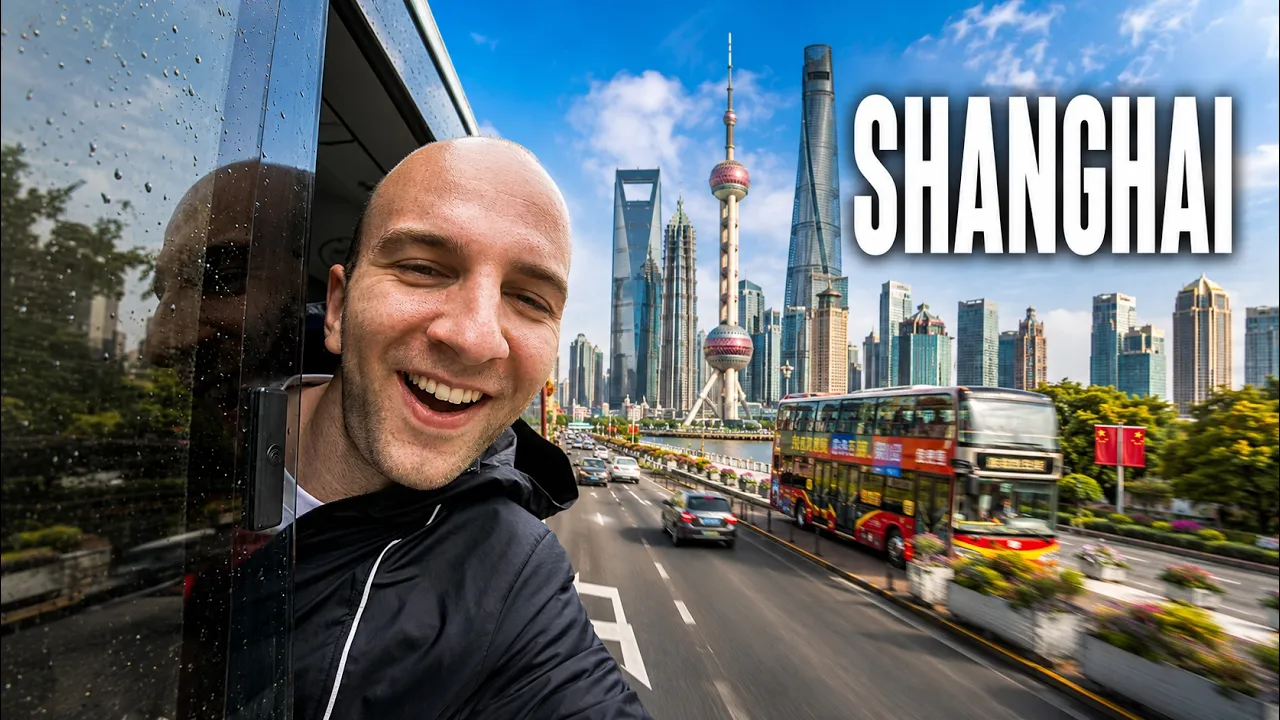
I start by taking Shanghai’s metro into the city centre and immediately find myself surrounded by some of the most recognisable buildings in China, including the Oriental Pearl Tower, Shanghai Tower, Jin Mao Tower and the famous “Bottle Opener” building. The skyline looks almost unreal, and even the trees, roads and architecture make Shanghai feel completely different from every other Chinese city I’ve visited.
With such limited time, I jump onto a hop-on hop-off sightseeing bus for the first time and travel through the city in the rain. From the top of the double-decker bus, I pass futuristic skyscrapers, luxury hotels, street art, enormous shopping streets and some of Shanghai’s most famous landmarks.
I then arrive at Nanjing Road, one of the world’s busiest pedestrian shopping streets, before reaching the Bund. On one side of the river are historic European-style buildings built during Shanghai’s foreign concession era, while directly across the water is one of the craziest modern skylines I have ever seen.
Later, I explore the waterfront, watch the unusual cargo boats travelling along the Huangpu River, get charged far too much for a professional photograph, and search for Shanghai souvenirs. I quickly discover that the exact same souvenirs become three or four times cheaper when you leave the main tourist streets and explore the smaller side roads.
I also come across shops selling AI robot dogs and other futuristic technology, before taking Shanghai’s metro all the way to Pudong Airport. Even the metro has emergency animations featuring LEGO-style characters, because apparently China manages to make everything cuter.
Finally, I explore the enormous airport, try Shanghai food to see whether it is really as sweet as people say, and discover that the airport is so large it has its own internal metro...
Uri Máté's whirlwind tour of Shanghai captures the city's futuristic skyline, from the Oriental Pearl Tower to the Bund. With only one day, he navigates the metro, hops on a sightseeing bus in the rain, and discovers the contrast between historic European buildings and modern skyscrapers. He also encounters AI robot dogs, overpriced souvenirs, and a massive airport with its own metro. A captivating glimpse into China's most dynamic city.
In this video, I arrive in Shanghai by China’s high-speed bullet train with only one day to explore one of the biggest and most futuristic cities in the world.
I start by taking Shanghai’s metro into the city centre and immediately find myself surrounded by some of the most recognisable buildings in China, including the Oriental Pearl Tower, Shanghai Tower, Jin Mao Tower and the famous “Bottle Opener” building. The skyline looks almost unreal, and even the trees, roads and architecture make Shanghai feel completely different from every other Chinese city I’ve visited.
With such limited time, I jump onto a hop-on hop-off sightseeing bus for the first time and travel through the city in the rain. From the top of the double-decker bus, I pass futuristic skyscrapers, luxury hotels, street art, enormous shopping streets and some of Shanghai’s most famous landmarks.
I then arrive at Nanjing Road, one of the world’s busiest pedestrian shopping streets, before reaching the Bund. On one side of the river are historic European-style buildings built during Shanghai’s foreign concession era, while directly across the water is one of the craziest modern skylines I have ever seen.
Later, I explore the waterfront, watch the unusual cargo boats travelling along the Huangpu River, get charged far too much for a professional photograph, and search for Shanghai souvenirs. I quickly discover that the exact same souvenirs become three or four times cheaper when you leave the main tourist streets and explore the smaller side roads.
I also come across shops selling AI robot dogs and other futuristic technology, before taking Shanghai’s metro all the way to Pudong Airport. Even the metro has emergency animations featuring LEGO-style characters, because apparently China manages to make everything cuter.
Finally, I explore the enormous airport, try Shanghai food to see whether it is really as sweet as people say, and discover that the airport is so large it has its own internal metro...
Uri Máté travels to Shanghai by high-speed train, carrying snacks, then takes the subway into the city. He sees the Oriental Pearl Tower, Shanghai Tower and other skyline buildings, and boards a hop-on hop-off sightseeing bus. The ticket he mentions costs 60 yuan for 24 hours and includes an English audio guide. He passes Nanjing Road and visits the Bund, where he looks at the historic waterfront buildings and modern skyline across the river. He watches cargo boats on the Huangpu River, pays 30 yuan for one professional photo after being quoted 240 yuan for eight, and visits shops selling White Rabbit goods and souvenirs. He later takes the sightseeing bus again because of the rain, gets off near Yu Garden, and walks through the area. He finds the same magnets on a side road for 10 yuan that cost 35, 40 or 50 yuan on the main pedestrian street, and says a five- to ten-minute walk can save money. He travels by metro to Pudong Airport; the ride takes over an hour, and he says an hour-and-a-half ride cost 6 yuan. At the airport he tries several dishes, then takes the airport's internal metro toward his gate. He says travelers should allow two hours because the airport is very large and his gate changes.
Uri Máté arrives in Shanghai by high-speed train and spends a day exploring the city. He takes the metro toward the Oriental Pearl Tower, then rides a hop-on hop-off sightseeing bus past landmark towers, Nanjing Road and the Bund. He watches cargo boats on the Huangpu River, visits souvenir shops and Yu Garden, and compares prices on the main tourist streets with those on nearby side roads. He finishes with a metro ride to Pudong Airport, samples Shanghai food and navigates the large airport, which has its own metro system.
Uri explores Shanghai in a day by metro and sightseeing bus, visits the Bund and Yu Garden, shops for souvenirs and travels to Pudong Airport.
Shanghai in One Day: Metro, Skyline and Souvenir Prices
4:21 Uri buys a 24-hour hop-on hop-off sightseeing bus ticket for 60 yuan. The bus has an English audio guide, and he uses it to hear information about the landmarks while rain falls outside.
21:57 Uri finds the same magnets on a nearby side road for 10 yuan after seeing them for 35, 40 or 50 yuan on the main pedestrian street. He says walking five to ten minutes away can make souvenirs cheaper.
23:18 After comparing souvenir prices, Uri advises leaving the main pedestrian roads and exploring a side road before buying. He says the same items can cost three or four times more on the main streets; this is his experience in Shanghai.
28:11 Uri says to allow two hours at Shanghai's large airport. He has been moving for a long time to reach his gate, which changes, and the airport has an internal metro to reach gates.
0:00 A day exploring Shanghai
0:41 Taking the train to Shanghai
1:37 Arriving in the city center
4:18 Riding the sightseeing bus
9:03 Walking along the Bund
10:21 Watching boats on the Huangpu River
12:19 Choosing a photo by the waterfront
14:56 Browsing White Rabbit souvenirs
17:54 Returning to the sightseeing bus
18:44 Exploring Yu Garden
21:57 Finding cheaper souvenirs nearby
23:32 Taking the metro to Pudong Airport
24:43 Shanghai metro safety animations
25:40 Trying Shanghai food at the airport
27:37 Taking the airport metro to the gate
urimateuri mateurimátéuri mátéShanghai travelShanghai in one dayShanghai metroShanghai sightseeing busThe BundYu GardenShanghai souvenirsPudong AirportHow does Uri get around Shanghai?
He uses the metro and a hop-on hop-off sightseeing bus, then takes the metro to Pudong Airport.
What does Uri notice about souvenir prices?
He finds the same magnets for 10 yuan on a side road, compared with 35, 40 or 50 yuan on the main pedestrian street.
What landmarks does Uri see from the sightseeing bus?
He points out the Oriental Pearl Tower, Shanghai Tower, Jin Mao Tower and other buildings, then travels along Nanjing Road and the Bund.
How much does Uri say the sightseeing bus ticket costs?
He buys a 24-hour ticket for 60 yuan and says it includes an English audio guide.
What does Uri recommend allowing for the Shanghai airport?
He says to arrive two hours early because the airport is enormous, the gate may change and an internal metro takes passengers to gates.