原文を読む
Explore China's Giant Buddha Statue on a Cliff by a Rive
Leshan Giant Buddha Sichuan: Cliffside Walkways and UNESCO-保
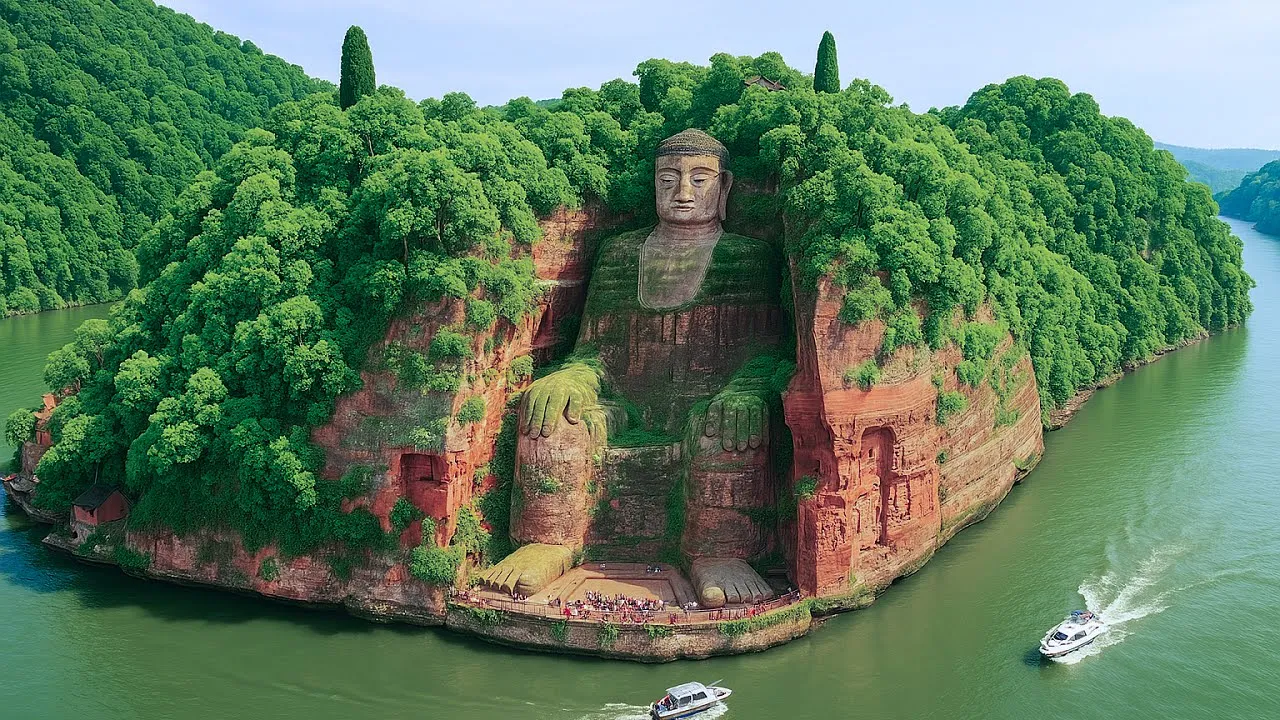
Hello! This is the Leshan Giant Buddha, located in Leshan City, Sichuan Province, China. It is very close to Chengdu, just a 1-hour ride by high-speed train. The Leshan Giant Buddha was built 1,300 years ago and remains one of the largest mountain-carved statues in the world, as well as the largest...
The Leshan Giant Buddha is a seated Maitreya Buddha carved into the mountainside in Leshan, Sichuan. It is a UNESCO World Heritage Site and one of the world’s largest stone Buddha statues. The statue’s body is part of the mountain, integrated with the landscape to create a striking blend of architecture and nature. Water channels run along the chest and behind the arm to connect and drain, helping reduce erosion. Behind the ears are caves that pass through from left to right, and holes exist inside the ears. The internal drainage system keeps the statue dry across weathering. Visitors can explore many cliffside walkways that offer varied viewpoints, from head level to upper body perspectives. The mountain itself isn’t very high, but the site feels monumental, especially on a first-person tour that highlights the scenic trails, temple square, crowds, viewpoints, and dramatic cliff paths.
The Leshan Giant Buddha towers on a cliff above the river in Leshan, Sichuan, a 1300-year-old seated Maitreya statue carved directly into the mountainside. This colossal stone sculpture is one of the world’s largest mountain-carved Buddha figures and a UNESCO World Heritage Site, renowned for blending architecture with natural landscape. The body appears to emerge from the rock itself, with water channels carved along the chest and behind the arm that channel water away to protect the statue from erosion. Hidden features include caves behind the ears and holes inside the ears, while a sophisticated internal drainage system helps keep the statue dry despite weathering. The site offers numerous cliffside walkways that allow visitors to view the statue from multiple angles and access dramatic vantage points. Although the mountain is not towering, the experience feels grand and intimate, especially for first-time visitors traveling from Chengdu by a short high-speed train ride. The video,,
The Leshan Giant Buddha is a seated Maitreya Buddha carved into the mountainside in Leshan, Sichuan. It is a UNESCO World Heritage Site and one of the world’s largest stone Buddha statues. The statue’s body is part of the mountain, integrated with the landscape to create a striking blend of architecture and nature. Water channels run along the chest and behind the arm to connect and drain, helping reduce erosion. Behind the ears are caves that pass through from left to right, and holes exist inside the ears. The internal drainage system keeps the statue dry across weathering. Visitors can explore many cliffside walkways that offer varied viewpoints, from head level to upper body perspectives. The mountain itself isn’t very high, but the site feels monumental, especially on a first-person tour that highlights the scenic trails, temple square, crowds, viewpoints, and dramatic cliff paths.
CN Walking takes us on a personal, ground-level tour of the Leshan Giant Buddha in Sichuan, a UNESCO World Heritage Site and the world's largest seated stone Buddha. The journey begins with a climb up a modest, manually carved red sandstone mountain, with no cable cars or wheelchair access. Along the way, he points out a 160-year-old inscription for 'Buddha Maitreya' and a statue of a big-bellied Arhat, symbolizing tolerance. Passing through a simple, uncommercialized temple, he notes a child praying for good grades and remarks on China's religious freedom. The first glimpse of the statue is described as 'massive and humble,' with a head 14.7 meters long and ears that could fit two people. He highlights the ingenious internal drainage system—hidden in the ears and behind the head—that prevents weathering. The cliffside walkways are narrow and congested, but the view from below reveals the immense scale, where people look tiny against the Buddha's feet. He captures the Tyndall effect of mist under the sunlight, creating a dramatic atmosphere. The trip ends with a climb back up, grateful the mountain isn't higher.<br><br>The video is rich with unique details, from the sophisticated ventilation devices inside the statue to the observations about how Buddha statues follow strict proportional rules. CN Walking’s insights, like noting that the mountain is the Buddha and the Buddha is the mountain, tie the experience to a deeper cultural and architectural significance. The bustling crowds and narrow paths add a layer of authentic travel challenge, while the mist sprayers and local interactions (like elderly tourists discussing geography) ground the experience in real-time exploration.
CN Walking takes us on an intimate tour of the Leshan Giant Buddha in Sichuan, China, a UNESCO World Heritage Site and the world's largest seated stone Buddha. Carved into a red sandstone cliff overlooking the Min River, this monumental statue stands as a breathtaking blend of architecture and nature. The journey up the mountain reveals ancient inscriptions, a serene temple, and hidden drainage systems that have preserved the statue for over a millennium. From the bustling crowds to the misty, awe-inspiring views at its feet, this visit is a profound encounter with history, scale, and spirituality.
Explore the colossal Leshan Giant Buddha in Sichuan with CN Walking. A UNESCO site, it's a majestic blend of mountain and statue.
Leshan Giant Buddha: Massive Stone Statue on a Cliff in Sichuan
0:57 The mountain is not high; it takes about 20 minutes from the entrance to the top. No wheelchair access or cable cars are available.
1:10 The path up the mountain is narrow with many steps. Be prepared for a steep walk, but the scenery is nice.
13:40 Ahead are cliffside walkways with many openings, but they were under repair during the visit. Expect some closures.
18:46 There are too many people going down the mountain. The road is very narrow, causing a lot of congestion. Plan for crowds.
22:19 The path down the mountain is very narrow and steep. Many elderly people and children walk very slowly, so allow extra time.
0:02 Introduction to the Leshan Giant Buddha
0:47 Climbing the mountain path
4:57 Entering the temple
10:01 First glimpse of the Buddha
13:40 Cliffside walkways and drainage
15:45 Descending to the Buddha's feet
22:19 Narrow and steep paths
28:47 Viewing from the base
33:16 Leaving the site
00:00 Preview: Quick overview of the video content
00:45 Climbing up: Scenic mountain trails
04:45 Temple: Temple square
06:24 Inside the temple: Crowds of people burning incense and praying
10:33 Big Stone Buddha: Best viewpoint for the head
10:33 Big Stone Buddha: Upper body view
16:55 Misty pathways
20:24 Crowded cave entrance
25:12 Beautiful cliffside walkways
30:37 Base of the Big Stone Buddha
big stone buddhamountain sculpturechinese landscapeleshan giant buddhasichuan travel4k 60world cultural heritagetemplelargest buddha statuemaitreya statuecliff side walk wayspopular toursHow high is the mountain to reach the Leshan Giant Buddha?
The mountain is not high. It takes about 20 minutes from the scenic area entrance to the top.
Are there any accessibility options like cable cars or wheelchairs?
No, there is no wheelchair access or cable cars. The path is narrow with many steps.
What is the material of the mountain?
Most of the mountain is made of red sandstone, and the stone paths, walls, and gates were all manually carved.
What is special about the Buddha's drainage system?
There is a sophisticated drainage system inside the head, including moisture barriers and ventilation devices, with hidden water channels in the ears.