查看原文
Traveling To The World's Largest City That Does Not Make Sense - Chongqing, China 🇨🇳
Chongqing China Travel Guide: World's Largest Futuristic Meg
Holafly: holafly.sjv.io/6kg1d3
This is one of the best ways for you to support the channel and make your next travels so much easier with an instant internet connection and hassle-free processes.
Thank you so much! 🙏🏽🇨🇳
China is one of the world’s oldest and most influential civilizations, with...
China is one of the world’s oldest and most influential civilizations, with a history that stretches back thousands of years. It is a country where ancient traditions and modern innovation exist side by side, creating a unique atmosphere that feels both deeply historic and strikingly futuristic. From imperial landmarks and classical architecture to cutting-edge skylines and high-speed rail networks, China offers an impressive blend of heritage, progress, and national ambition. <br><br> As the world’s second-largest economy, China plays a major role in global trade, manufacturing, technology, and infrastructure. The country is known for its remarkable development over recent decades, lifting hundreds of millions of people out of poverty and building some of the most advanced transportation systems in the world. Its high-speed rail network is the largest on Earth, connecting major cities with speed and efficiency, while its urban centers showcase major achievements in engineering, innovation, and public development.
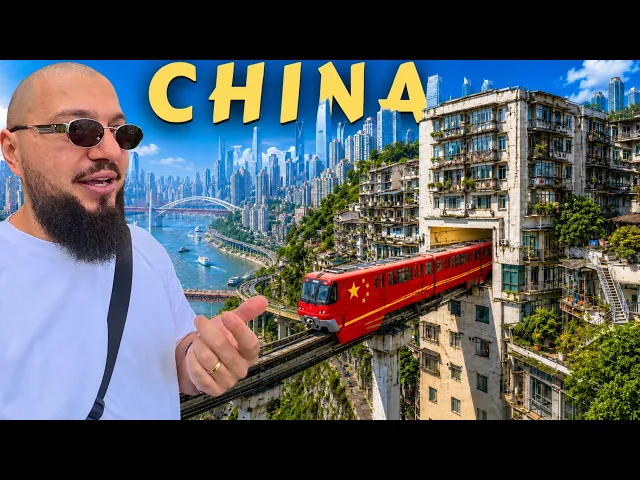
This video takes you on an unforgettable journey through Chongqing, a city that defies logic at every turn. Known as the world's largest city, it's a place where futuristic skyscrapers rise from misty mountains, and you might find yourself on the 22nd floor of a building, only to step out onto a street at ground level. It's a sensory overload in the best way—a true testament to China's incredible scale and transformation. If you're ready for a place that challenges your perception of reality, this is it.
China is one of the world’s oldest and most influential civilizations, with a history that stretches back thousands of years. It is a country where ancient traditions and modern innovation exist side by side, creating a unique atmosphere that feels both deeply historic and strikingly futuristic. From imperial landmarks and classical architecture to cutting-edge skylines and high-speed rail networks, China offers an impressive blend of heritage, progress, and national ambition. <br><br> As the world’s second-largest economy, China plays a major role in global trade, manufacturing, technology, and infrastructure. The country is known for its remarkable development over recent decades, lifting hundreds of millions of people out of poverty and building some of the most advanced transportation systems in the world. Its high-speed rail network is the largest on Earth, connecting major cities with speed and efficiency, while its urban centers showcase major achievements in engineering, innovation, and public development.
Davud Akhundzada kicks off his Chongqing adventure from a spacious hotel room with a 180-degree panoramic view, noting the city's nickname as the 'mountain city' and its staggering population of over 30 million.<br><br>He steps out into the bustling streets during a public holiday, immediately encountering the local culture. He buys a sticky rice sandwich from a street vendor for just 44 cents using Alipay, and marvels at the trust system where vendors leave drinks out for customers to pay via QR code without supervision.<br><br>Davud then discovers a local artist painting inside glass vials, selling a piece for 100 yuan (about $15). He notes the artist doesn't pay rent, simply works next to his home, and reflects on the genuine trust he feels in China, avoiding scams.<br><br>The highlight is the famous Liziba metro station, where the train runs through a residential building. Davud captures the incredible sight of crowds gathering to watch the train emerge from the building, joking about the 'chicken or egg' question of which was built first.<br><br>He offers practical holiday travel advice: arrive early to beat crowds. Later, he samples fried dumplings for just $1.50 and navigates the metro using a QR code system that updates every minute for security.<br><br>Davud ends his journey at a local restaurant, ordering rice and meat while avoiding Chongqing's famously spicy hot pot. He pays $8.20 for the meal and notes cultural habits like littering and spitting that he finds challenging, but concludes that despite these negatives, China remains an incredible country full of adventure.
Davud Akhundzada takes us on a whirlwind tour of Chongqing, a futuristic mountain city that defies logic. From a metro train slicing through a residential building to the incredible trust system of unattended street vendors, he captures the city's chaotic energy and surprising order. His journey reveals a place where ancient resilience meets jaw-dropping innovation, leaving him—and viewers—utterly amazed.
Davud explores Chongqing's futuristic metro, crowded holiday streets, and trust-based local vendors, finding a city of stunning contrasts and resilience.
Exploring Chongqing Futuristic Metro and Local Culture
0:31 Stay at Yolo Aling Art Gallery Hotel for panoramic views; costs $140 but can accommodate up to four people.
10:02 Use Alipay or WeChat Pay for all purchases; carry cash only as a souvenir or backup since China is nearly cashless.
13:58 Buy drinks from unmanned vendor stalls by scanning QR codes; trust system is safe and widely used in Chongqing.
22:04 Visit Liziba station to see the metro pass through a residential building; go early to avoid holiday crowds.
31:20 Travel during holidays requires planning: arrive at tourist spots by 7-8 AM to beat the midday rush of crowds.
38:55 Purchase a QR code for public transport via Alipay; scan to enter metro, no need for physical tickets.
49:14 Avoid spicy food in Chongqing by clearly communicating 'no spicy' or using a translation app when ordering.
56:52 Expect to use reusable chopsticks; ask for disposable ones if uncomfortable. Check QR codes on tables for digital menus.
0:31 Welcome to Chongqing
10:38 Street food and Alipay
15:09 Trust system for drinks
22:04 Liziba metro station
31:44 Return and dumplings
46:48 Navigating the metro system
55:47 Ordering food no spicy
1:03:17 Paying the bill
0:31 Welcome to Chongqing
10:38 Street food and Alipay
15:09 Trust system for drinks
22:04 Liziba metro station
31:44 Return and dumplings
46:48 Navigating the metro system
55:47 Ordering food no spicy
1:03:17 Paying the bill
chongqing travelchina metro residential buildingliziba station中國街頭美食alipaychina holiday travelfuturistic citymountain cityno spicy food chinaHow much did the hotel cost?
I paid $140 US for a room that can accommodate up to four people, with panoramic views and two bathrooms.
How do you pay for things in China?
Almost everyone uses Alipay or WeChat Pay. I scanned QR codes to pay for street food and the metro. I keep cash for souvenirs.