查看原文
Tiny trees vs North Chinese DESERT! 🇨🇳 They planted 600,000 trees here, can they survive?
Desertification Fight in North China Planting 600,000 Trees
The sand took over, can we take this land back?? Fighting desertification in North China
🐓🌾🚜My life in rural China full playlist🐓🌾🚜
Content creators can enjoy unlimited access to a huge variety of music - funky, peaceful, upbeat, or whatever else you’re looking for - and eliminate the headache...
Katherine visits rural China to explore a large-scale tree planting project intended to combat desertification in North China. The video follows daily farming life, the logistics of planting hundreds of thousands of trees, and the hope of reclaiming land from shifting sands. It highlights rural work, community effort, and the environmental stakes of restoring fragile landscapes, all framed through a traveler’s personal perspective and curiosity about whether such initiatives can endure long term.
Katherine’s Journey to the East invites us into a stark contrast between resilient nature and shifting sands as she tackles desertification in North China. The episode centers on a bold effort to reclaim land by planting a staggering 600,000 trees, testing whether green blankets can outpace drifting dunes and the harsh climate. The footage blends rural life in China with big environmental questions, showing farmers, tractors, and the daily rhythms of work and hope. It emerges as a human story about perseverance, community effort, and the practical challenges of reforesting barren land, all set against the vast scale of the northern desert. The vibe stays grounded and curious, balancing documentary-style observation with moments of personal reflection from the traveler. Overall, it’s a hopeful exploration of restoration in a landscape under siege by sand, and it asks whether large-scale tree planting can meaningfully slow desertification while supporting rural livelihoods.
Katherine visits rural China to explore a large-scale tree planting project intended to combat desertification in North China. The video follows daily farming life, the logistics of planting hundreds of thousands of trees, and the hope of reclaiming land from shifting sands. It highlights rural work, community effort, and the environmental stakes of restoring fragile landscapes, all framed through a traveler’s personal perspective and curiosity about whether such initiatives can endure long term.
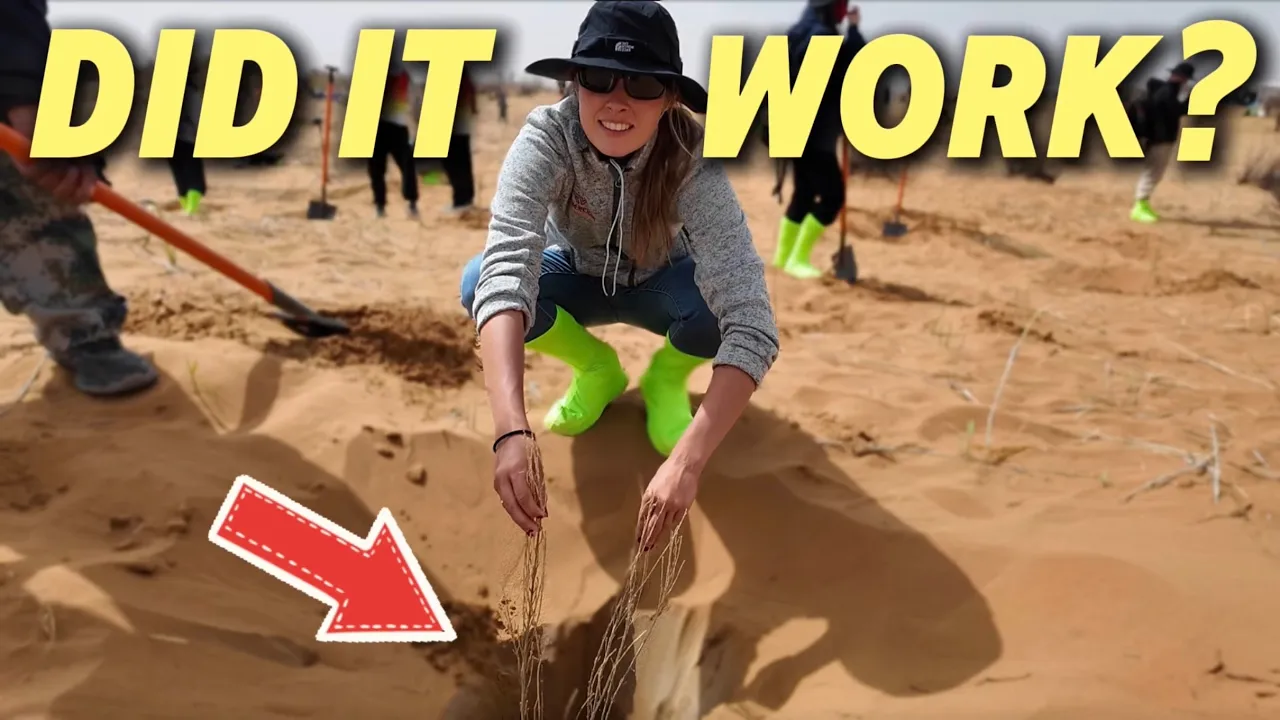
Katherine ventures into the Alxa desert in Inner Mongolia to witness the real-world impact of Ant Forest, an Alipay initiative that gamifies tree planting. <br>Ten years ago, this was barren, moving sand. Now, over 600,000 trees have taken root. The project converts users' low-carbon activities into green energy, which funds the planting of real trees. Katherine, who has planted 11 trees remotely, finally joins a group of 300 to see the results in person.<br>The forest is not a sterile monoculture but a chaotic, biodiverse ecosystem. She highlights the resilience of the tiny shrubs, which have massive root systems that bind the soil and prevent erosion. The experience contrasts sharply with the rapid pace of city life, emphasizing a different rhythm of patience and long-term commitment. <br>Beyond the trees, Katherine encounters local wildlife—beetles, lizards, and a cockroach—proof that life is returning to a once-dead zone. The video captures the painstaking manual labor of planting in loose sand and the hope that this slow, deliberate effort can reverse decades of desertification, one tree at a time.
Join Katherine on a journey into the Chinese desert, where millions of tiny trees are fighting back against encroaching sands. This isn't just tree planting; it's a story of community, patience, and real environmental hope. Watch as virtual green energy from the Alipay app transforms into a real, thriving oasis, proving that small actions can lead to monumental change.
Katherine travels to the Inner Mongolia desert to see if tiny trees can stop desertification, witnessing a massive, real-world reforestation project.
Ant Forest China: Tiny Trees Fighting Desertification in Alxa
1:01 Natural deserts are stable, but desertification occurs when they expand into usable land. The key is stopping the spread, not eliminating all deserts.
2:00 Ant Forest works by converting low-carbon activities like public transport into 'green energy' in the Alipay app, which funds real tree planting.
4:40 Restoring a desert starts with hearty, resilient shrubs, not large trees. These shrubs have deep root networks that stabilize the soil.
5:53 A healthy ecosystem is chaotic and diverse, not a perfect monoculture. Look for forests with a mix of species scattered in clusters.
7:10 Planting in the desert is tough. You must first clear loose sand before digging. It requires patience and physical effort to ensure the tree survives.
0:00 Arriving in the Desert
1:01 Two Types of Deserts Explained
1:36 Ant Forest's 600,000 Trees
2:29 The 10km Trek to the Oasis
3:29 Meeting Tree Planting Enthusiasts
4:40 The Secret of the Tiny Shrub
5:53 A Forest, Not a Monoculture
7:10 Planting a Tree Firsthand
7:54 The Slow Pace of Real Change
0:00 Arriving in the Desert
1:01 Two Types of Deserts Explained
1:36 Ant Forest's 600,000 Trees
2:29 The 10km Trek to the Oasis
3:29 Meeting Tree Planting Enthusiasts
4:40 The Secret of the Tiny Shrub
5:53 A Forest, Not a Monoculture
7:10 Planting a Tree Firsthand
7:54 The Slow Pace of Real Change
desertificationreforestationchina environmenttree plantingant forestgreen energy內蒙古sustainable tourismWhat were the tiny trees like?
They looked like fragile little twigs, but they had incredibly long root networks underground to find water and hold the soil together.
How does Ant Forest work?
You collect green energy by doing low-carbon activities like taking public transport. Once you have enough, Ant Forest plants a real tree for you in places like Inner Mongolia.
Was the desert completely dead?
No, we found lots of life! There were beetles, a cockroach, and a lizard with a curly tail. It shows the ecosystem is making a comeback.
Did you visit any other attractions?
No, the main focus was the Ant Forest reforestation project in the Alxa desert of Inner Mongolia.