查看英文原文(English)
China’s Underground City Shows How Far the West Is Behind
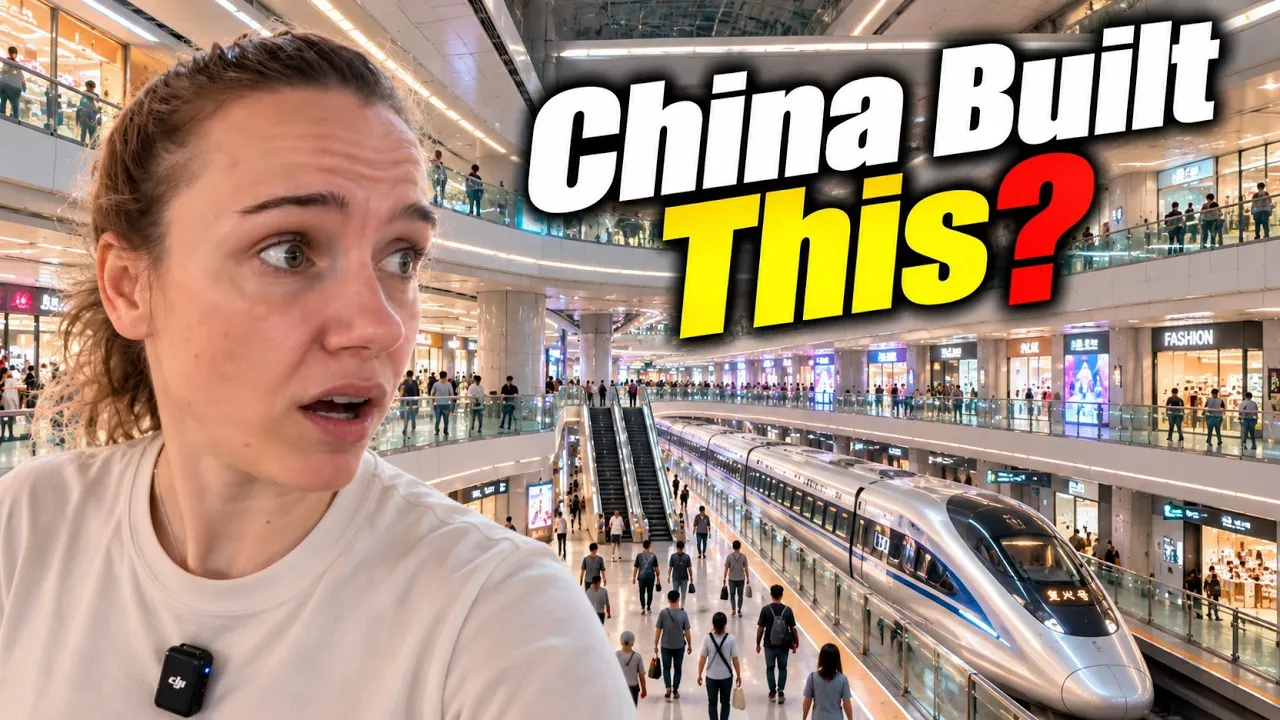
Shenzhen Underground City: Shops, Metro and Futian Railway Station
China’s infrastructure isn’t only impressive above ground—there’s an entire world beneath the streets.
In this video, I explore China’s underground cities and see how subway systems, shopping malls, services, and public spaces are all connected beneath some of the country’s busiest cities. After...
China’s infrastructure isn’t only impressive above ground—there’s an entire world beneath the streets.
In this video, I explore China’s underground cities and see how subway systems, shopping malls, services, and public spaces are all connected beneath some of the country’s busiest cities. After living in China and traveling in China, I’m still surprised by how seamlessly everything connects—from the subway and high-speed rail to shopping, transportation, and everyday services. China’s infrastructure plays a huge role in keeping cities moving and supporting the local economy.
Sometimes, to understand how modern China really works, you have to look underground.
Lizzy walks through connected underground commercial passages in Shenzhen, where she finds restaurants, shops, beauty services, a dentist, massage chairs, a spa, KTV rooms and an arcade. She follows signs toward the metro and Futian Railway Station, including a route marked 260 m that stays underground. She describes the links between shops, the subway and high-speed rail, and later shows lockers and a gate where she scans a WeChat QR code. The video is her walk-through and impressions of this underground complex.
China’s infrastructure isn’t only impressive above ground—there’s an entire world beneath the streets.
In this video, I explore China’s underground cities and see how subway systems, shopping malls, services, and public spaces are all connected beneath some of the country’s busiest cities. After living in China and traveling in China, I’m still surprised by how seamlessly everything connects—from the subway and high-speed rail to shopping, transportation, and everyday services. China’s infrastructure plays a huge role in keeping cities moving and supporting the local economy.
Sometimes, to understand how modern China really works, you have to look underground.
Lizzy opens by describing an underground layer of city life beneath dense Chinese cities, with shops, food, services and links to metro systems and high-speed rail. She walks through passages with restaurants, a dentist, a nail shop, beauty services, massage chairs, a spa and KTV rooms. She points out occupied shops, clothing and food stores, arcade games and signs for shopping, the subway and high-speed rail; one sign marks the rail area 260 m away along a route that stays underground. She says signs in large cities are often in English and that pointing can communicate what a visitor needs, while a translator is sometimes useful in smaller cities. The passages connect to Shenzhen's Futian Railway Station and transit. Lizzy comments on the cleanliness and range of services, then shows food, lockers and a gate where scanning a WeChat QR code lets her pass. She lists ventilation, drainage, electricity, fire safety, communications, elevators and escalators as parts of the underground infrastructure. She says she spent nearly five hours underground filming, ate there, and used the subway to go home. She closes by describing shops, pedestrian areas, metro lines, railway stations and high-speed trains connected beneath the city.
Lizzy walks through connected underground commercial passages in Shenzhen, where she finds restaurants, shops, beauty services, a dentist, massage chairs, a spa, KTV rooms and an arcade. She follows signs toward the metro and Futian Railway Station, including a route marked 260 m that stays underground. She describes the links between shops, the subway and high-speed rail, and later shows lockers and a gate where she scans a WeChat QR code. The video is her walk-through and impressions of this underground complex.
Lizzy explores Shenzhen's underground shops and services, then follows the passages toward the metro and Futian Railway Station.
Shenzhen Underground City: Shops, Metro and Futian Railway Station
3:36 For a rest break underground, Lizzy points out massage chairs priced at 40 RMB for half an hour in the passage she explores.
6:24 In large cities, Lizzy says signs are in English and pointing often gets the message across; she says visitors may need a translator sometimes in smaller cities.
6:57 At the underground wayfinding sign, follow the shopping, subway or high-speed rail directions; the rail area is marked 260 m away, and Lizzy says the walk stays underground.
12:54 At the gate she shows, bring up a WeChat QR code, scan it, and pass through; the transcript does not identify which venue uses the gate.
0:00 An underground layer beneath city streets
1:54 Entering the underground passages
2:14 Restaurants, shops and services
3:28 Massage chairs and beauty services
3:46 A spa and KTV rooms
5:33 More shops and arcade games
5:56 Links to metro and high-speed rail
6:21 Signs and language for visitors
6:57 Directions and an underground walk
8:42 Coffee shops and everyday services
9:16 Subway fares and rail tickets
10:47 Futian Railway Station in Shenzhen
12:15 Food, lockers and QR-code access
13:16 Engineering beneath the station
14:13 A city connected underground
Shenzhen underground shoppingFutian Railway StationShenzhen metro connectionsChina underground cityShenzhen travelhigh-speed rail connectionsWhere is the underground complex shown?
Lizzy identifies the area as Shenzhen and later says she has reached Futian Railway Station.
What does the underground network connect?
She shows shops and services linked to the subway and the high-speed rail area at Futian Railway Station.
How far is the high-speed rail area from the sign?
The sign she points to marks it 260 m away, along a route that stays underground.
Can visitors get around without speaking Chinese?
Lizzy says signs in large cities are in English and pointing often works, though she sometimes uses a translator in smaller cities.
What does one massage-chair option cost?
Lizzy reads a price of 40 RMB for half an hour at the chairs she finds underground.
How does Lizzy pass through the gate she shows?
She gets a QR code in WeChat, scans it and goes through; she does not name the venue using that gate.
Which services does she find underground?
Her walk shows restaurants, a dentist, a nail shop, beauty services, a spa, KTV rooms and an arcade.
What did Lizzy pay for the subway ride she mentions?
She says a ride lasting an hour and a half cost 6 RMB.