查看原文
Unit 731: the horrific secret hidden in Harbin, China 🇨🇳 |S8, EP156
Harbin's Dark Secret: A Ride to Unit 731 in Northeast China
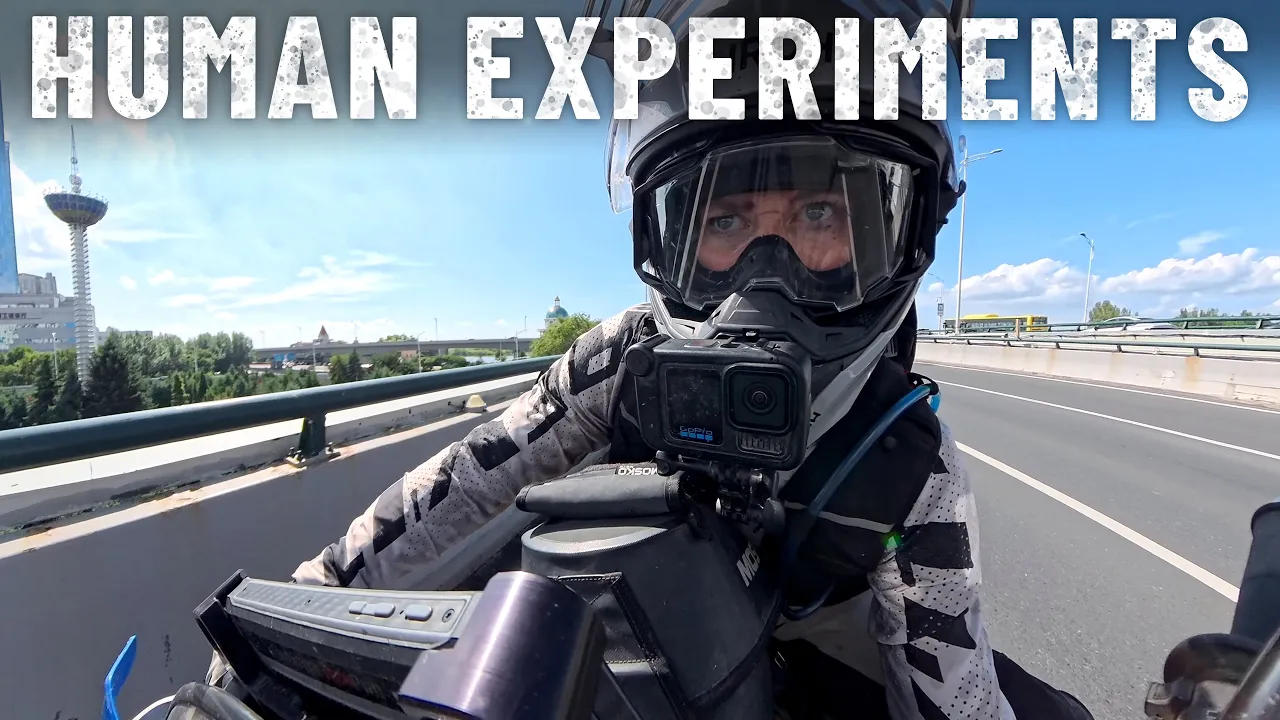
In this episode, I ride to Harbin, a large city in China. Nowadays, it's a cool city with lots to see and to do, but on the outskirts of the city lies a dark place that should not be forgotten.
International Paperback edition = NOT signed
Here I teach all my filming techniques including getting...
In this episode, I ride to Harbin, a large city in China. Nowadays, it's a cool city with lots to see and to do, but on the outskirts of the city lies a dark place that should not be forgotten.
Harbin is a cool city with plenty to see and do, but on its outskirts lies a dark place that should never be forgotten. In this episode, a solo rider rolls into China's northeast and confronts the horrific secret of Unit 731. It's a journey that balances the thrill of the open road with the weight of history, reminding us that some shadows remain long after the ride ends.
In this episode, I ride to Harbin, a large city in China. Nowadays, it's a cool city with lots to see and to do, but on the outskirts of the city lies a dark place that should not be forgotten.
On this leg of her round-the-world motorbike adventure, Itchy Boots trades the empty roads of Inner Mongolia for the towering skyline of Harbin, a city that feels more like Moscow than the China she has seen so far. The ride itself is long and hot, with a few moments of panic when her Yamaha Tenere starts sputtering before a petrol station appears just in time. But once the rider reaches Harbin, the real story unfolds through the layers of history hiding beneath the modern streets.
Harbin began as a small fishing village, a name that literally means 'place for drying fishing nets.' It was transformed in the 1890s when Russian workers came to extend the Trans-Siberian Railway. By 1917, 40,000 of the city's 100,000 residents were Russian, and people from 53 nationalities and 45 languages called the city home. This European influence was so strong that new fashion from Paris arrived here before Shanghai. Walking through the city, the visitor sees ornate Russian Orthodox churches, European facades, and squares that could pass for somewhere in Eastern Europe.
But the beauty of Harbin is not the whole story. After taking a taxi into the center, because motorcycles are not allowed there, she visits the site of Unit 731. This was a Japanese biological warfare facility during the 1930s and 1940s, hidden in plain sight on the outskirts of Harbin. The museum documents horrific experiments carried out on Chinese civilians, along with Mongolians, Russians, and Koreans. Prisoners were called marutas, meaning logs or pieces of wood, and were subjected to unimaginable cruelty in the name of research. She describes feeling sick to her stomach after walking through the exhibits.
Historians estimate that between 300,000 and 500,000 Chinese civilians died because of biological attacks that came out of this place. The facility was burned down by the Japanese just before the end of World War II, and many of those responsible escaped punishment by trading their research data to the United States. It is a dark and uncomfortable chapter that many school curriculums, including the one she grew up with in the Netherlands, never mention. For the traveler, witnessing this site was like learning an entirely hidden side of World War II.
Despite its heaviness, the episode is not without small moments of lightness. There are roadside snacks, friendly encounters with traffic police, and the absurd image of an Eiffel Tower replica in the middle of an intersection. But the strongest impression left by this journey is the reminder that history does not disappear just because buildings are burned or stories are buried. Itchy Boots leaves Harbin with a deeper understanding of China's relationship with Japan, proof that travel can be as much about confronting the past as it is about enjoying the present.
In northeastern China, Itchy Boots rides into Harbin and discovers a surprising Russian-European skyline. But beneath the city's modern face lies Unit 731, a Japanese wartime laboratory where unspeakable human experiments occurred. This episode blends motorbike travel with a sobering history lesson, leaving viewers with a haunting reminder that some wounds of war should never be forgotten.
Itchy Boots rides to Harbin, takes in its Russian architecture, and confronts the haunting history of Unit 731's wartime atrocities.
Harbin, China: Unit 731 Atrocities & Russian Architecture
11:26 Use the Chinese navigation app Amap in cities because it shows how many traffic lights remain before you reach your destination. It might seem like extra information, but it helps you prepare for urban traffic.
12:23 Harbin looks very different from other Chinese cities because of its Russian and European heritage. In the 1890s, Russian workers arrived to extend the Trans-Siberian Railway, creating a unique architectural mix that still defines the city center today.
16:23 Visit Saint Sophia Russian Orthodox Church, built in 1907 by Russian soldiers, and walk around Sophia Square. You can even see locals dressed as elf princesses taking photos, adding a playful contrast to the historic setting.
17:06 Motorcycles are not allowed in Harbin's city center because of a new local rule, so use taxis or public transport instead. Even with electric scooters everywhere, your motorbike cannot enter the core urban area.
18:09 Visiting the Unit 731 museum is emotionally intense, but it is essential for understanding Harbin's dark wartime past and the broader history between China and Japan. Approach it with respect and prepare yourself before entering.
22:50 After exploring the evidence, take time to reflect on how history is interpreted. Even with museum displays and survivor interviews, people may debate the past, so keep an open and critical mind.
0:29 Morning start in Jalaid
1:32 Route plan to Harbin
6:16 Arrival at Harbin's massive skyline
7:00 Fuel scare on the highway
12:23 Exploring Harbin's Russian architecture
16:23 Visiting Saint Sophia Church
17:06 Taxi ride due to motorcycle ban
18:09 Unit 731 site visit
0:29 Morning start in Jalaid
1:32 Route plan to Harbin
6:16 Arrival at Harbin's massive skyline
7:00 Fuel scare on the highway
12:23 Exploring Harbin's Russian architecture
16:23 Visiting Saint Sophia Church
17:06 Taxi ride due to motorcycle ban
18:09 Unit 731 site visit
round the world on motorbikemotorbike travellersolo female travelleradventure rideroffroad motorcycleitchy bootsyamaha tenereyamaha xt600xt600zvintage motorcycle1987 yamaha tenerearound the worldharbin chinaunit 731japan war crimesWhy did you visit Unit 731?
I felt I had to see it. It's a crucial part of Harbin's identity and of China-Japan relations, and I had never learned anything about it. I like showing fun things, but some stories are too important to ignore.
What surprised you most about Harbin?
The city looked more like Moscow than anywhere I'd seen in China. I learned that Russian workers arrived in the 1890s to extend the Trans-Siberian Railway, and eventually people from 53 nationalities and 45 languages lived there.
Why weren't you riding your motorcycle in the city?
Harbin has a new rule that motorcycles are not allowed in the city center. Electric scooters are everywhere, but I had to take a taxi to get to Unit 731.
What was the most disturbing thing you learned at the museum?
The scale of the horror. Prisoners were called marutas, or logs, and the experiments included freezing people, disease infection, and mustard gas. Hundreds of thousands of Chinese civilians died from the biological attacks.