Source originale
Beijing to Xi’an at 350KM/H – China’s Bullet Train Is Next Level!
Beijing to Xi'an: A High-Speed Rail Adventure in China
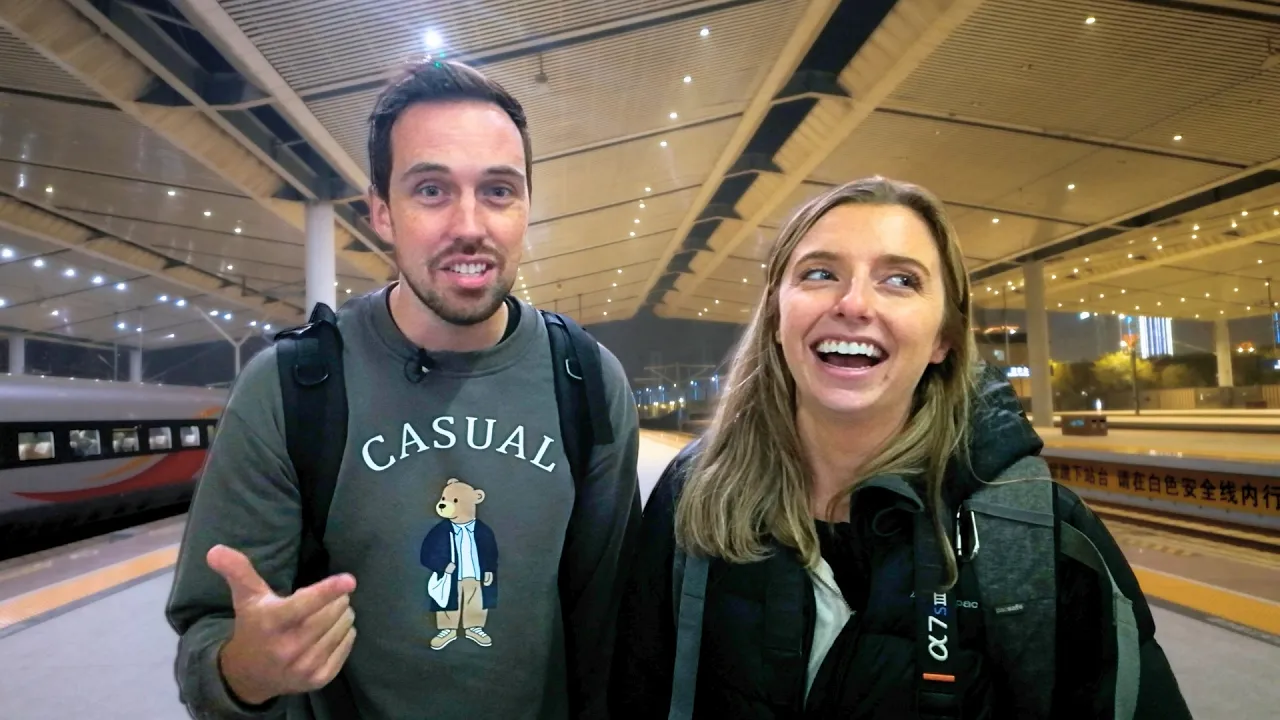
Today, we're hopping on a Bullet Train from Beijing to Xi’an, China!
With so many ways to travel around China, we had plenty of options. Flying would have cost about the same. But we figured taking the train would let us see more of the Chinese countryside. The real question is… was this China...
Today, we're hopping on a Bullet Train from Beijing to Xi’an, China!With so many ways to travel around China, we had plenty of options. Flying would have cost about the same. But we figured taking the train would let us see more of the Chinese countryside. The real question is… was this China bullet train it worth it? 🤔
Embark on a thrilling high-speed rail journey through China with Jordan and Emily! This adventurous couple traded their jobs for a year of global exploration, and this episode captures their incredible experience aboard China's bullet train from Beijing to Xi'an. Discover the stunning landscapes that whiz by as they travel at 350km/h, comparing the cost-effectiveness and scenic views of train travel versus flying. A must-watch for anyone planning a Chinese adventure!
Today, we're hopping on a Bullet Train from Beijing to Xi’an, China!With so many ways to travel around China, we had plenty of options. Flying would have cost about the same. But we figured taking the train would let us see more of the Chinese countryside. The real question is… was this China bullet train it worth it? 🤔
Jordan and Emily leave Beijing late and head about 1,000 km south on a train that runs at 350 km an hour, planning to arrive in Xi'an in about five and a half hours. They say they normally book trains with another site but book with trip.com for China, where the passport is used instead of exchanging an online booking for a physical ticket. They sit in second class, the cheapest option, in a 32 seat configuration at $110 per person. First class has a 22 configuration with wider seats and costs $170 per person, and business class has a 21 configuration with lie-flat seats at 320 Australian dollars per person. They think flights were close in price. They tour the toilet, which is a western style toilet with a sink, toilet paper and seat covers, and rate it 2 and a half out of 5. They note the train is quiet and that passing another high-speed train can be felt. They explain that a maglev train from Shanghai runs at 430 km an hour and a maglev in Japan at 600 km an hour. On their seat tour they find a tray table, a pocket, coat hangers, decent foot space and room for bags, but no Wi-Fi, and part of their window is covered by a blind. They explain that G, D and C trains are high-speed while Z, T and K trains are slower or overnight trains; an overnight train would have been cheaper but taken 14 plus hours. After arriving in Xi'an they say the bullet train felt mundane, the cities looked the same at speed and smog limited the view, so they would fly if they did it again but do not regret the trip. They then check into a hotel with a projector that is less than half the price of the last one.
Jordan and Emily take a high-speed train from Beijing to Xi'an, about 1,000 km south, running at up to 350 km an hour. They book through trip.com, where the passport is used instead of a physical ticket, and sit in second class at $110 per person, comparing it with first class at $170 and business class. They tour the toilet and the seats, mention that there is no Wi-Fi, explain the train letters G, D, C, Z, T and K, and talk about faster maglev trains. After arriving in Xi'an they say they would fly if they did the trip again, and then check into a new hotel with a projector.
A couple rides a 350 km/h train from Beijing to Xi'an, compares seat classes and prices, tours the toilet and seats, and says they would fly next time.
Beijing to Xi'an Bullet Train: Seats, Prices and Verdict
0:47 They book trains in China with trip.com, where you do not need to exchange the online booking for a physical ticket. It is all done through your passport, so they handed over their passport and were let through the gate.
1:48 Second class is the cheapest option, with a 32 configuration of skinny seats, a good recline and good leg room. It costs $110 per person. First class is a 22 configuration with wider seats and costs $170 per person.
2:23 Business class is the top level, with lie-flat seats in a 21 configuration so you can sit alone, less used toilets and more stewards per person. It would have cost 320 Australian dollars per person for this trip.
3:32 The toilet on board is a western style toilet with a sink with running water, toilet paper and seat covers. It was quite wet already, and they rate it 2 and a half out of 5. Each cabin has its own hand washing area.
6:38 The second class seat reclines, with a tray table, a pocket, coat hangers, decent space for feet and plenty of space for bags. They could not see any Wi-Fi on the train, so plan to be offline.
8:19 Trains in China are named by letters. G, D and C trains are high-speed trains, while Z, T and K trains are slower or overnight trains. An overnight train on this route would have been cheaper but taken 14 plus hours.
10:25 After the trip they say that if they had their time again they would just fly, because it is such a distance and flying gets you there quicker. They do not regret taking the train, but would probably not do it again.
0:06 Leaving Beijing for Xi'an
0:40 Booking with trip.com and boarding
1:48 Seat classes and prices
3:32 Toilet tour on board
4:37 Passing another high-speed train
4:54 Maglev trains and speeds
6:08 Second class seat tour
8:17 What the train letters mean
9:14 Arriving in Xi'an
9:47 Final thoughts on the train
11:16 Checking into the new hotel
travel vlogtravel couple vlogbeijing chinaxi'an chinaxian chinabeijing to xian trainbeijing to xi'an trainbeijing to xi'an bullet trainbeijing to xian bullet trainchina bullet trainchina bullett trainchina travel vlogchina train travel vlogtravel vlog chinachina travelchina travelstravel in china vlogtravel in china train vlogtrain travel in chinahow to catch a train in chinachina train vlogbeijing to xi'anchina trainHow fast is the train from Beijing to Xi'an?
They travel at 350 km an hour, covering about 1,000 km south. G trains can get up to 380 km per hour.
How much does second class cost on the Beijing to Xi'an train?
They say second class is the cheapest option at $110 per person, compared with $170 per person for first class.
How do you book a train in China without collecting a physical ticket?
They book with trip.com, and it is all done through your passport, so there is no need to exchange the online booking for a physical ticket.
What do the letters on Chinese train numbers mean?
G, D and C trains are all high-speed trains, while Z, T and K trains are slower or overnight trains.
Is there Wi-Fi on the bullet train?
They could not see any Wi-Fi on the second class carriage.
Would they take the train or fly from Beijing to Xi'an again?
They say they would just fly next time because it is such a distance and flying is quicker, although they do not regret taking the train.