原文を読む
I Left Shenzhen… and Found Real China
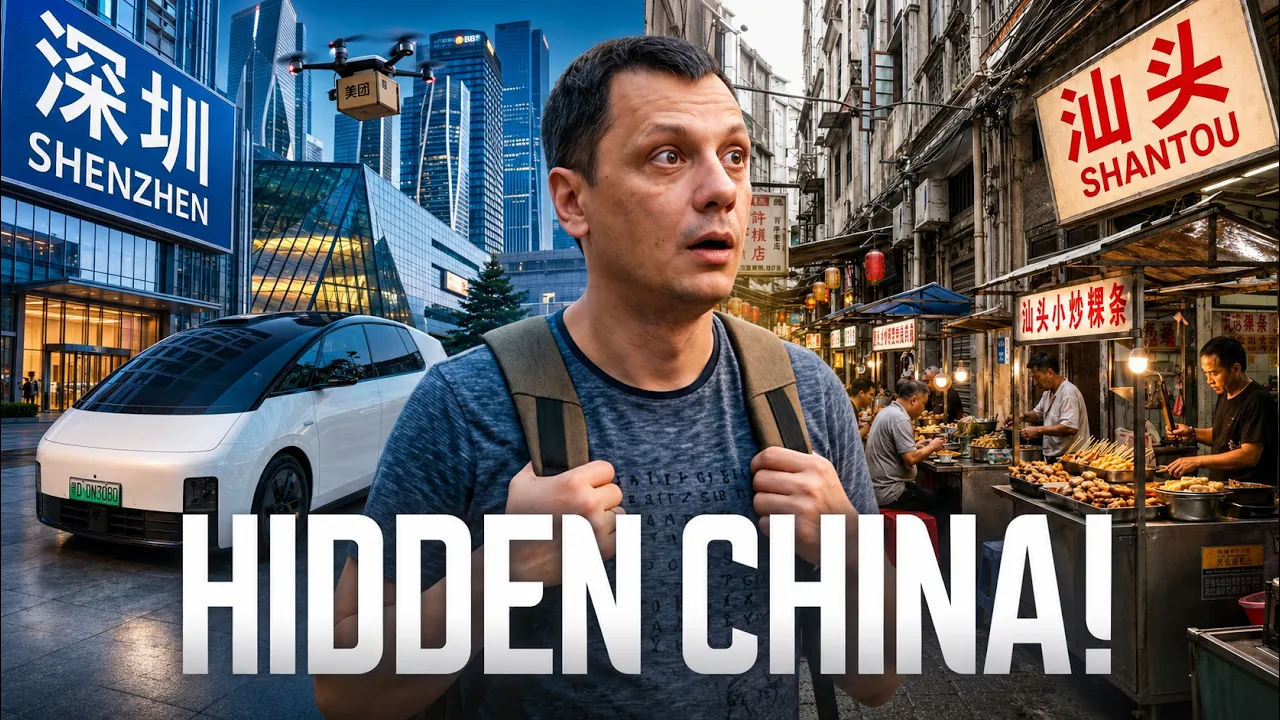
Leaving Shenzhen for Shantou: Exploring Real Chaoshan Coast
Shantou is easily one of China’s most underrated cities —a coastal gem in Guangdong that most people completely overlook. After leaving the neon-lit futurism of Shenzhen, I took a bullet train into the Chaoshan region to find a totally different vibe: crumbling city walls, quiet island villages,...
Shantou is easily one of China’s most underrated cities —a coastal gem in Guangdong that most people completely overlook. After leaving the neon-lit futurism of Shenzhen, I took a bullet train into the Chaoshan region to find a totally different vibe: crumbling city walls, quiet island villages, hectic seafood markets, and more Gongfu tea than I knew what to do with.
In this travel doc, we’re diving deep into Shantou. We hit everything from the Dahao Ancient City and the old port district to Mayu and Nan’ao Islands. Along the way, there’s plenty of Chaoshan beef hotpot, "Duck Poop" tea (yes, really), Mazu temples, and a look at the e-bike culture that runs this place. We also explore Chenghai—the "Toy Capital of the World"—we test drive a NIO ES8, tour a drone factory, and get lost in a massive B2B toy showroom.
This isn't the "postcard" China you see in travel brochures. It’s coastal life—raw, local, and full of stories that usually stay hidden in plain sight.
After escaping Shenzhen's neon skyline, our traveler dives headfirst into the raw, unfiltered soul of Shantou—a coastal Chaoshan city that most tourists skip. From crumbling ancient walls and hectic seafood markets to sipping 'Duck Poop' tea (yes, that's the name), this journey is anything but ordinary. He explores Mayu Island's Mazu temples, gets tangled with drone police on Nan'ao, and even test-drives a NIO electric SUV. Along the way, there's steaming Chaoshan beef hotpot, a peek inside the world's toy capital Chenghai, and e-bikes buzzing through every alley. This isn't postcard China—it's the real, gritty, delicious coastal life.
Shantou is easily one of China’s most underrated cities —a coastal gem in Guangdong that most people completely overlook. After leaving the neon-lit futurism of Shenzhen, I took a bullet train into the Chaoshan region to find a totally different vibe: crumbling city walls, quiet island villages, hectic seafood markets, and more Gongfu tea than I knew what to do with.
In this travel doc, we’re diving deep into Shantou. We hit everything from the Dahao Ancient City and the old port district to Mayu and Nan’ao Islands. Along the way, there’s plenty of Chaoshan beef hotpot, "Duck Poop" tea (yes, really), Mazu temples, and a look at the e-bike culture that runs this place. We also explore Chenghai—the "Toy Capital of the World"—we test drive a NIO ES8, tour a drone factory, and get lost in a massive B2B toy showroom.
This isn't the "postcard" China you see in travel brochures. It’s coastal life—raw, local, and full of stories that usually stay hidden in plain sight.
CoolVision's journey from Shenzhen to Shantou reveals a China rarely seen in travel brochures—a coastal world where ancient rituals and modern commerce collide in the most unexpected ways.
The trip begins with a business-class bullet train ride that sets the stage for contrast. Leaving behind Shenzhen's neon futurism, CoolVision arrives in a city that feels deliberately unpolished, where crumbling Qing Dynasty walls stand within sight of toy factories generating millions in revenue. This is Shantou, a place that chose its own pace.
Local guide Aiden becomes the interpreter of this layered world. At Dahao Ancient City, built in 1717, CoolVision discovers China's smallest walled city—just 10,000 square meters—where rooftops carry feng shui symbolism and family lanterns bearing surnames still hang from eaves. A family-run medicine shop, unchanged for half a century, offers a window into calculation methods that predate calculators.
What makes Shantou distinctive emerges through small encounters. The traveler samples yugan juice, a throat-soothing local remedy that earns only a hesitant "50/50" recommendation. Fish maw shops sell dried swim bladders as essential postpartum nutrition. Fish balls—born here, never basic—appear in flavors including jet-black squid ink. The food culture operates as identity, not mere sustenance.
A moment of genuine tension dissolves into warm surprise when a police officer, after photographing the drone setup, offers his direct number for any trouble. This protective instinct repeats later on Nan'ao Island, where the same officer coordinates flight permissions through official channels—yet still enforces strict boundaries when wind turbines approach restricted airspace.
The video captures Shantou's kinetic energy through its e-bike culture, where $5 hires scooter-like vehicles for five-kilometer dashes through chaotic streets. No subway exists; two wheels rule. The Ying Dance at Haishang Food Plaza shatters expectations of ancient performance—loud, rhythmic street dance based on Water Margin legends, unfolding in a modern shopping mall.
Evening brings risk and revelation with "Chaoshan poisons"—marinated raw seafood that Aiden warns could hospitalize the uninitiated. CoolVision's late-night Google search about parasites confirms the gamble's real stakes.
The Chaoshan diaspora story surfaces through Aiden's explanation of ``guiren''—our own people—and through expatriates Kelly and Chase, who built their countryside life on land where Kelly's own ancestors departed for Thailand generations before. Their village reveals the inversion of Chinese success: the biggest homes stand not in cities but in rural communities, built for multigenerational return.
Manufacturing might emerges through Chenghai's toy and drone factories, where 100-person operations produce 100,000 units monthly for Western markets. Every business meeting begins with gongfu tea ritual—three cups, always three, regardless of attendee count—while office smoking persists as 1990s workplace time capsule.
The NIO ES8 test drive to Nan'ao Island showcases electric vehicle innovation alongside environmental reality: sea haze, not pollution, obscures the bridge crossing. The SUV's battery swapping and 4D cinema chassis demonstrate technological ambition, even as island restrictions ground drones near strategic installations.
CoolVision's final reflection centers on pace—Shantou's deliberate slowness against Shanghai's frenzy, the unscheduled hot pot gatherings where strangers become contacts, the same-day spontaneity that Canadian politeness would schedule weeks ahead. This, the video suggests, is the real China's hidden texture: not postcard perfection but lived rhythm, preserved tradition, and community forged through ritual rather despite it.
CoolVision ditches Shenzhen's neon for Shantou's crumbling walls and chaotic seafood markets, discovering a China where ancient city gates survive, raw seafood dares visitors, and every business deal starts with three cups of gongfu tea. From dodging drone patrols on Nan'ao Island to test-driving NIO's massage-seat SUV, this is coastal Chaoshan life—unpolished, deeply local, and nothing like the brochure.
CoolVision escapes Shenzhen's glitter for Shantou's raw coastal reality—ancient walls, risky raw seafood, e-bike chaos, and tea-fueled toy factories that reveal a completely different China hiding in plain sight.
Shantou Chaoshan Travel Guide: Ancient City, Nan'ao Island, Local Culture
0:28 Book business class on Chinese bullet trains for fully flat seats at around $75—ideal for arriving rested on longer journeys.
5:54 Always coordinate drone flights with local police beforehand; restricted airspace near military or infrastructure sites carries serious consequences.
9:00 Rent e-bikes rather than searching for shared bicycles in Shantou; they function as the city's primary transportation network.
9:26 Visit Lawn Bay Market in the morning for the full experience, and ask vendors to prepare seafood in multiple styles including decorative cuts.
13:04 Try duck poop tea ice cream in Shantou's old downtown—a premium oolong with a misleading name that hides genuine quality.
23:27 Accept spontaneous hot pot invitations without asking who attends; the mystery and social mixing define local dining culture.
25:01 Visit Chenghai B2B showrooms to test products directly before committing to orders, checking quality factors like noise levels firsthand.
0:02 Introduction to Shantou journey
1:47 Dahao Ancient City exploration
6:19 Ying dance performance
9:23 Lawn Bay Market morning
12:52 Shantou Bay Bridge crossing
21:06 Chenghai toy factory tour
27:58 NIO ES8 test drive begins
30:15 Nan'ao Island arrival
0:00 Leaving Shenzhen for Shantou
0:55 China’s Hidden Coastal City
2:10 Bullet Train Business Class
3:15 Why Shantou Feels Different
4:30 Dahao Ancient City
6:45 Local Food and Old Streets
8:25 Police Stopped Our Drone Flight
9:45 Yingge Dance and Raw Seafood
11:35 Teochew Culture and Gaginang
13:10 Longbei Market
14:20 Mayu Island and Mazu Temple
16:45 Old Downtown Shantou
18:20 Duck Poop Tea and Local Snacks
20:00 Chaoshan Beef Hotpot
21:25 Village Life in Chaoshan
23:20 Gongfu Tea and Office Culture
24:50 Inside China’s Toy Capital
27:00 NIO ES8 Test Drive
28:45 Road to Nan’ao Island
30:20 Drone Trouble on Nan’ao
31:50 NIO Battery Swap
32:30 Final Thoughts on Shantou
chaoshan culturegongfu teabeef hotpotancient citycoastal chinatoy factoryelectric vehiclewet marketlocal foodisland travelWhat makes Dahao Ancient City special?
Built in 1717 during the Qing Dynasty, it's officially the smallest ancient city in China at only 10,000 square meters, with well-preserved walls and unique feng shui rooftop designs you can only find in the Chaoshan region.
What is 'duck poop' tea and why is it called that?
It's actually a premium oolong tea. Ancient farmers gave it that disgusting name to trick thieves into thinking it wasn't worth stealing. The tea is delicious, and now there's even duck poop tea ice cream.
What was the drone incident on Nan'ao Island?
I was flying near some wind turbines that looked like an amazing cinematic shot, but less than 20 seconds later the police officer called with a dead serious voice and said if I flew toward those windmills, my drone may be shot down for national security reasons.
How does Chaoshan beef hotpot work?
The beef is sliced incredibly thin, which takes years to master, and it's so fresh that restaurants receive deliveries twice daily from Guizhou Province. Dinner invitations happen same-day—you just show up without knowing who else will be there, like a mystery box.
What was it like visiting the toy factories in Chenghai?
Every office visit began with a gongfu tea ritual with exactly three cups regardless of how many people were present. The factories don't look impressive from outside, but they generate millions. We visited a drone factory producing over 100,000 units monthly with less than 100 employees.