查看原文
China’s President Wants to Dominate the Aviation World
China's Aviation Ambition: Xi'an T5 Airport & Aerospace Dominance
China is on a mission to become the world’s top player in aviation. With massive investments in airports, aircraft manufacturing, and cutting-edge technology, the country’s goal is clear: lead the skies and reshape the global aviation industry. Ambition and speed are driving China’s rise to the top....
China is on a mission to become the world’s top player in aviation. With massive investments in airports, aircraft manufacturing, and cutting-edge technology, the country’s goal is clear: lead the skies and reshape the global aviation industry. Ambition and speed are driving China’s rise to the top.
Embark on a captivating journey through China's ambitious ascent in the aviation sector. This video delves into the nation's strategic drive to dominate the global skies, showcasing extensive investments in state-of-the-art airports, advanced aircraft manufacturing, and pioneering aerospace technologies. Witness firsthand the sheer scale of China's vision and the rapid pace at which it's transforming the aviation landscape, positioning itself as a formidable leader in the industry.
China is on a mission to become the world’s top player in aviation. With massive investments in airports, aircraft manufacturing, and cutting-edge technology, the country’s goal is clear: lead the skies and reshape the global aviation industry. Ambition and speed are driving China’s rise to the top.
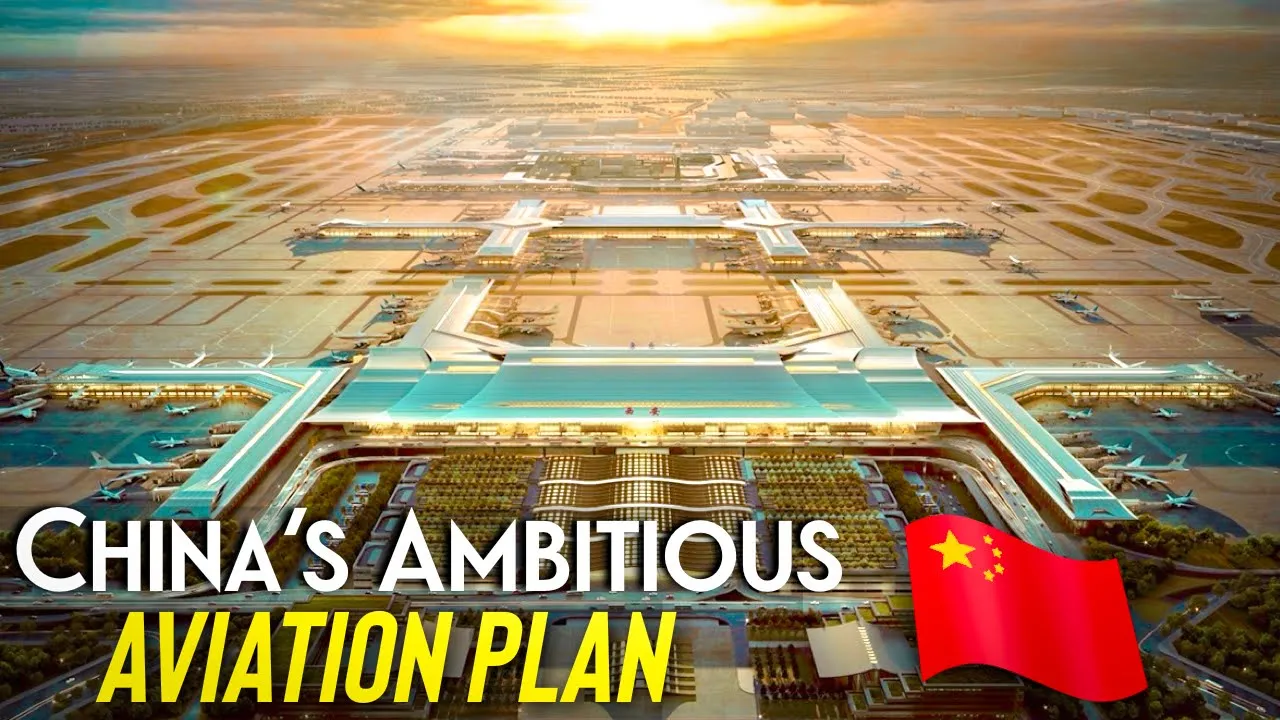
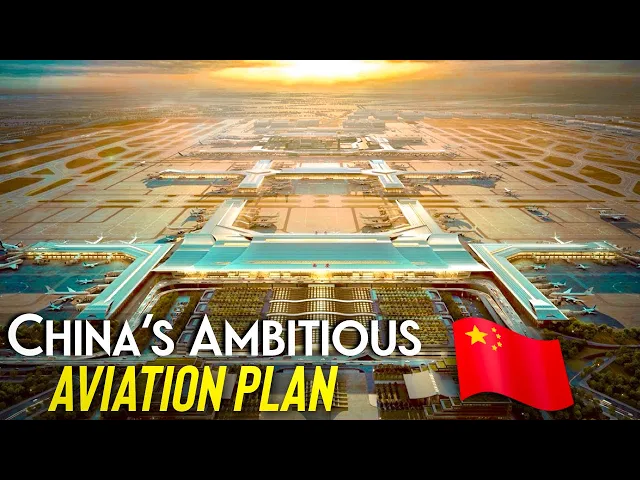
China's aviation ambitions are on full display in this video, as Rafa explores Xi'an's newly opened T5 terminal. The editor notes that China is building 10 to 14 airports each year, aiming to surpass the US as the world's biggest aviation market by 2030. The T5 terminal, opened in February 2025 after just four years of construction, is a marvel of scale and technology. Spanning 700,000 square meters, it almost quadruples the combined area of the other three terminals. Rafa points out that this is the first airport in China to have a T5, skipping the unlucky number four. The terminal is not just big; it's smart. Huawei helped implement automation and cloud systems, and there are Face ID screens that instantly show flight details and walking routes. Rafa demonstrates this, amazed at how the camera recognizes him. The airport also features the world's first museum inside a terminal, displaying over 100 Sani artifacts found during excavation. Rafa is stunned by the ancient pottery and traditional buildings integrated into the modern design. Environmental sustainability is key: the runway concrete was recycled into floor tiles, and natural lighting floods the space. For travelers, there are nap pods costing 30 yuan per hour. Rafa tries one, describing it as basic but private, with a bed, fan, and reading light, though not soundproof. The video also covers China's homegrown C919 jet, which has over 1,000 orders and competes with Boeing and Airbus. Rafa highlights that the airport's construction generated tens of thousands of jobs and signals to global investors that Northwest China is open for business. The editor emphasizes that this airport is a gateway to Xi'an's historic attractions like the Terra Cotta Warriors, turning layovers into cultural experiences. With a budget of $6.5 billion, the terminal can handle up to 83 million passengers annually by 2030. Rafa's tour perfectly captures China's blend of ancient history and futuristic ambition, showing how the country is racing to dominate the skies.
Rafa takes us inside Xi'an's futuristic T5 terminal, a jaw-dropping showcase of China's aviation ambitions. With a museum inside, face-scanning tech, and nap pods, it's like no airport you've seen. The editor highlights China's rapid airport construction and the homegrown C919 jet, painting a vivid picture of a nation racing to dominate the skies. Don't miss this tour of the future of travel.
Rafa tours Xi'an's futuristic T5 airport terminal, featuring a museum, face-scanning screens, and nap pods, showcasing China's aviation ambitions and the C919.
Inside Xi'an's New T5 Airport: Museum, C919, Smart Features
8:42 Visit the world's first airport museum inside T5, showcasing over 100 Sani artifacts found during construction. It's a cultural stop during layovers.
10:15 Try the nap pods at Xi'an Airport for 30 yuan per hour. They are basic but private – a bed, fan, and reading light, though not soundproof.
12:31 Use the Face ID screens at the airport to quickly get your flight information and directions to your gate. Just scan your face.
11:37 Take advantage of the smart luggage carts with touch screens and charging ports. They display flight info and let you charge your phone.
5:14 Notice the sustainable design: recycled runway concrete used in floor tiles and natural lighting from skylights.
0:01 China's aviation goal
1:28 Xi'an T5 terminal opening
2:29 Massive terminal size
4:43 C919 homegrown jet
5:14 Green airport features
8:42 World's first airport museum
10:15 Nap pod experience
11:37 Smart luggage cart
12:31 Face ID flight info
13:04 Face ID route guidance
0:01 China's aviation goal
1:28 Xi'an T5 terminal opening
2:29 Massive terminal size
4:43 C919 homegrown jet
5:14 Green airport features
8:42 World's first airport museum
10:15 Nap pod experience
11:37 Smart luggage cart
12:31 Face ID flight info
13:04 Face ID route guidance
中国xi'anxi'ant5chinese airports中国西安陕西aviationairportc919terminal 5museumsmart technologynap podsface idsustainable design中国旅行What is the nap pod like at Xi'an Airport?
It's a basic room with a bed, fan, reading light, and outlet. It's private but not soundproof, costing 30 yuan per hour.
How does the Face ID screen at the airport work?
It scans your face and instantly shows your flight information, seat number, boarding gate, and even the walking route to your gate.
What is the museum inside the airport terminal?
It's the world's first airport museum, showcasing over 100 Sani artifacts found during the airport's construction, including ancient pottery and buildings.
What is the C919 aircraft?
It's China's homegrown commercial jet, a competitor to the Boeing 737 and Airbus A320. It has over 1,000 orders and started flying domestic routes in 2023.
Why doesn't the airport have a T4 terminal?
Because the number four sounds like 'death' in Chinese, so they skip it and go from T3 to T5.